

I think I spend more on my dog’s food than I do on my own, and last week I noticed those big brown, innocent-guilt-inducing eyes staring at me every time I ate. I was about to go get him a treat when I realized he’d actually eaten more than me that day. No wonder the vet is on me to get him to lose some weight, and I’d love to blame my dog for being ‘very treat-oriented ’, but it’s his overly chunky pitbull frame that has as much to do with me as it does him.
That's complementarity.
Minuchin's term for a foundational systemic concept: each person's behavior organizes everyone else's. Nobody runs the pattern alone because in a family, everyone keeps it going, even when no one means to.
When my vet says that I’ve got to stop feeding him so many treats, I can’t really blame anyone else; it’s not like he’s helping himself to snacks from the cupboard while I’m at work. But in family work, there’s often an insistence that one person is to blame and a refusal to see how others contribute.
Complementarity is both a concept and an intervention, and using it at the right moment, with a well-timed question, can help shift the family’s focus from a single person's problem to the space between two or more family members.
In A Nutshell:
When someone says
- "I am depressed."
A complementarity intervention means you ask,
- "Who makes you the most depressed?"
We’re not arguing, adding, or educating; we’re just recutting the same sentence so it names both the relationship and what the person explained.
Here’s a more detailed breakdown of five steps to help you master this skill.
The Big News:
- The Family Systems Collective is live - it's a free online community for clinicians who are interested in Family Systems therapy. My goal is to get more therapists practicing systemic therapy, and helping more families.
2. When you join the community, you get first access to videos and invited to workshops, trainings, Q&A's and more. The first video is about complementarity and goes into more detail about what this is.

3. Did you subscribe to the podcast?
 Why not listen to the audio version of this newsletter. I think I figured out how to get this onto Apple, Spotify and Amazon Music.

Move 1: Expand the problem.
Every symptom is doing a job, usually managing how close or distant people are, or rerouting conflict away from where it would land. And no symptom runs on one person.
Our training will likely get us wondering "what's going on inside this person with him," but systemic therapy encourages us to ask ourselves two better questions: 1) what is the symptom accomplishing, and 2) who's on the payroll?
We can begin by turning the statement around and including family members in the next step.
Move 2: Re-punctuate, don't re-inform.
Sometimes it’s tempting to reassure, rescue or give more context, especially when someone is self-attacking. So the first rule is to not change any of the facts, and sometimes not even the wording.
You take the same reality and cut it in a different place.
- “My child doesn’t listen to me”
- “Who does your child listen to?”
Or
- “It’s my fault; I stay at work too”
- “Who in the family would you be in a rush to get home for?"
If the family is in real distress, a recut can feel flippant, so slow it down and land it warmly, or it reads as a party trick.
Move 3: Widen it without the blame.
People fight to keep the blame focused on themselves or someone else.
Sticking with self- or other-blame is less anxiety-provoking than sitting with the idea that a problem is shaped by the people around you.
So don't strip the blame away. Accept it, then add one person.
Here’s what not to do:
- Client: “It’s my depression; I know I need to exercise more and stop reading my phone at night.”
- Therapist: “No, depression is influenced by family and work and a myriad of other things”
- Client: “Maybe, but I know I could do more; I should really join a gym.”
The client will often dig in and insist that their answer or belief is right. So instead, try something outrageous like agreeing!
- Client: “It’s my depression; I know I need to exercise more and stop reading my phone at night.”
- Therapist: "Of course it's yours. Who in the family is it heaviest around? Who makes it lighter?"
Or
- Client: "I'm just the family screw-up.":
- "Okay. Whose life gets easier when you're the screw-up?"
You let them keep the role and the blame, and sometimes even agree, but also expand who's standing in the frame with them. We’re moving into a mutual context rather than mutual blame.
Move 4: Run an experiment.
Once you’ve asked several of these, and possibly more circular questions, you try to find the family loop around the behavior that incorporates the function of the symptom.
A famous example is a family that comes into treatment because their son has an eating disorder, and each night, one parent spends two hours chopping and preparing the food and coaching this child to eat. The purpose of that was to stop the two caregivers from bickering. Mom was so engrossed in feeding the child that she didn’t have time to argue.
Families have to feel the loop, not just hear it named, so when it becomes clear, name it with everyone in it:
- The more Dad works, the angrier Mom is at her son when he's home,
- The more she rides the kid about homework, the worse home feels,
- Because home is awful, Dad is more likely to work late.
Just knowing the pattern or explaining it to a family isn’t enough; they’ll agree and think you’re brilliant, but the job isn’t done.
We also have to get two people to change their parts in the loop and understand it.
"Let's try something. Dad, you come home early and do your homework. Mom, tonight your job is a bath."
Get two moving, not one. But if only one parent will cooperate, don't force the other. Start with the willing one and a small live experiment, and let the rest follow.
Move 5: Don't trust the first change.
Hopefully, next week you’ll get a quick win, and the family will report that things have changed. Congratulations! Enjoy it for a second, but brace yourself, because the system will try to snap back into its regular patterns.
The symptom was the family's way of protecting something, and the family will struggle once it’s over.
At this point, I ask myself whether it was a change in behavior or in the system.
When a pattern moves only at the behavior level, it reappears elsewhere, and there are three tells.
- Dad comes home early, and within weeks, his wife has a fresh complaint about the son or him.
- The angry kid settles, and a sibling starts melting down.
- The couple stops fighting but perhaps reports that they’re not having sex anymore.
If nothing migrates, something structural actually shifted. If it migrates, it’s just evidence you’ve got more work to do.
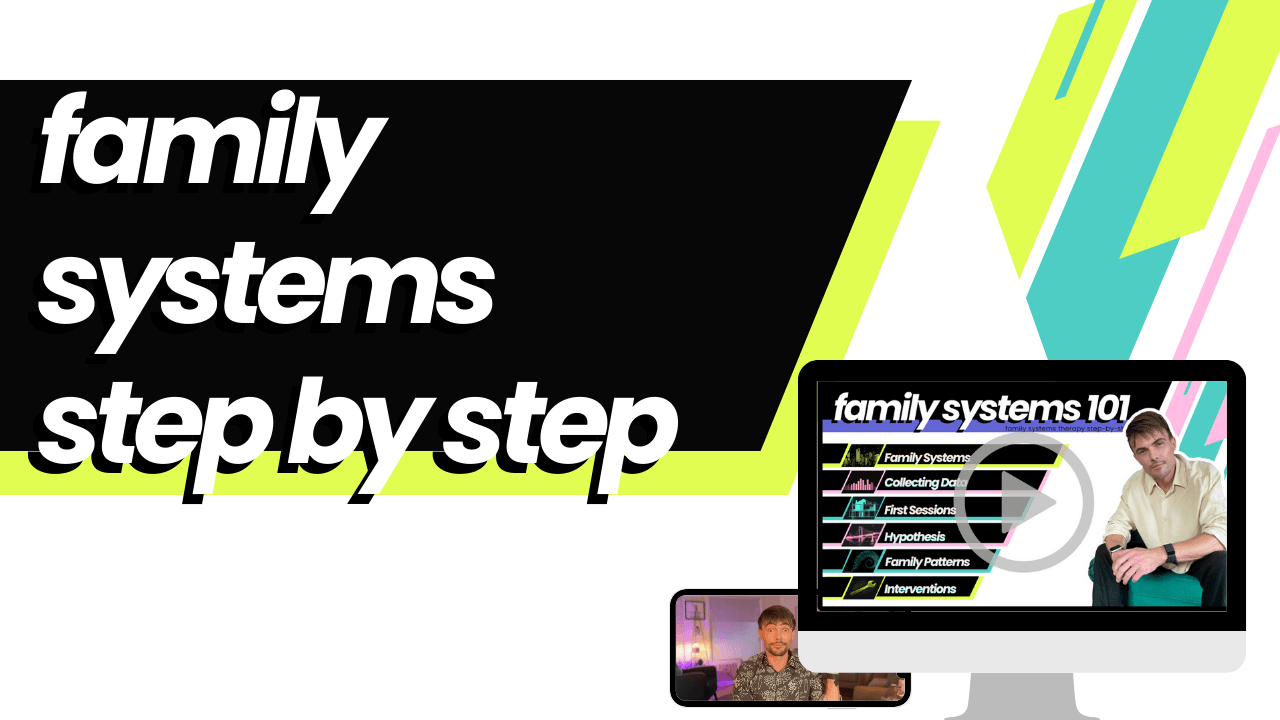
If you want to learn more about this, I’ve just posted a video that goes into more detail for you - you can watch it in the Family Systems Collective, the new online Skool Community I started.
Until the next time, Oliver





Responses