

I was thinking about the top skills I would teach anyone who wanted to start running process groups, at least from a Modern Analytic perspective.
So over the past few weeks I've put them together and made a video for each.

What Is A Process Group? Most of us trained to run individual therapy, then got handed a circle of six people and left to figure it out. This video lays out what a process group actually is, why it's harder than it looks, and what your real job is once you're sitting in that circle.

The Group Agreement When a member keeps rolling in late and you say nothing, your silence doesn't read as kindness. It reads as permission. Here's how the group agreement gives you something firmer to stand on than "being the nice one."
Bridging You know the silence that feels like three minutes but is really thirty seconds, and the interpretation that just makes it worse? That's usually the wrong lens, not the wrong words. Bridging is the interpersonal move that gets a quiet group talking to each other instead of at you.
Progressive Emotional Communication "I feel like the writing was on the wall" is not a feeling. If you can't cleanly separate a thought from a feeling, everything else you do in group is built on shaky ground. This one gives you the distinction nobody taught us in grad school.
Countertransference The feeling you're pushing down in session might be the most important thing happening in the room. Ignore it and you lose your best diagnostic tool. This is about what your own reactions are telling you about the group.
Object-Oriented Questions A furious teenager, everyone looking at me to fix it, and every question I asked making it worse. This video teaches the kind of question that actually reaches someone when the usual "how does that make you feel?" falls flat.

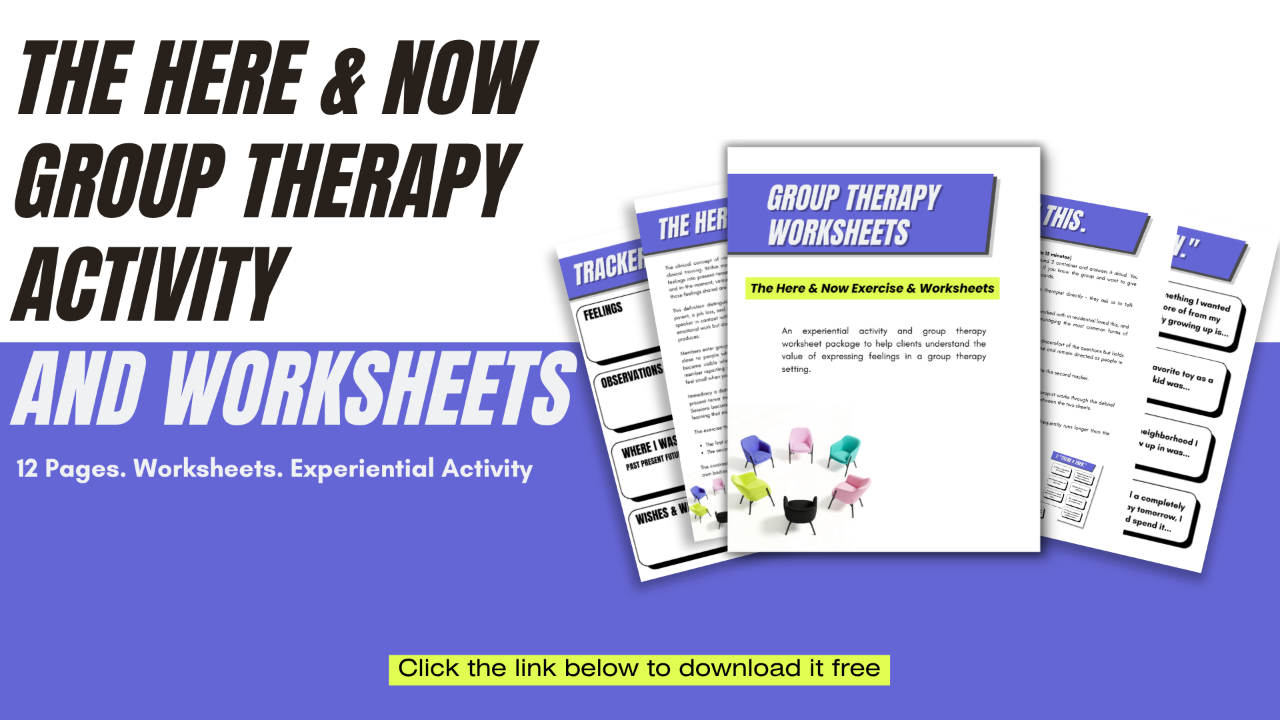
What Is Immediacy? You'd rather hear about the dramatic thing that just happened than sit through me reading a diagnostic manual. So would your group. That pull toward the here and now is immediacy, and it's the difference between a group that's alive and one that's just taking turns.
How To Work With Immediacy Knowing you want more here-and-now is one thing. Doing it live is another. This video walks through the concrete techniques, starting with "the time machine," for pulling a group out of old stories and into what's happening between people right now.
For a limited time you can get these all in the membership section of my youtube page - it's only $9.99 a month (for a limited time) and because it's a membership, you can cancel at any time.

In the coming weeks I'm adding more on anger:
Anger In Groups The belief I want to shred: that a well-behaved group is a working group. If you walk in next week trying to keep everyone calm and polite, you'll miss some of the most useful work available to you. Here's why anger is already in the room.
How To Handle Anger Anger in group feels dangerous, it's unpredictable, and everyone's watching you to manage it. You can be the security guard and shut it down, or you can build a holding environment strong enough to let it be felt. This is how you do the second one.
Difficult Group Member: The Attacker The member who aims verbal aggression at the same target week after week, usually right when someone else gets vulnerable. The group goes quiet or quietly sides with them, and that collusion is part of the pattern. Here's how to read it and what to do.
Difficult Group Member: The Self-Attacker The member whose anger turns inward. "I know it sounds stupid," "I don't know why I'm like this," the apology that lands before anyone can respond. This covers the obvious version and the subtler ones, and how to work with all of them.
Difficult Group Member: The Help-Rejecting Complainer They bring a problem, you and the group offer help, and they reasonably explain why none of it will work. Week after week. This video decodes what the pattern is really protecting and how to stop chasing solutions that were never going to land.
Difficult Group Member: The Therapist Attacker The angry member you dread most is the one who's angry at you. Sometimes it's blunt, sometimes it's disguised as an innocent question about whether your approach even works. Here are the three versions and how to stay useful instead of defensive.

I also want to make a video for certain problem dynamics
- The Silent Member
- The Storyteller
- The Monopolizer
- Group Resistances
- Group Infanticide
I'll keep you posted as soon as they go live and more importantly, what do you want videos on? What would be helpful?
- Live Q&A?
- Cosultation Sessions?
- Other skills?
Check out the course on my YouTube - I'd love to see you join the community,
Oliver


Responses