

I have a few Monopolizers in my practice. Luckily, they’re in individual therapy, not group, because they could easily talk for almost the entire session if I let them.
This pattern is especially challenging and even harmful in a group setting. When I started leading my first group at an agency, there were already eight members. Within a month, two left and a third was thinking about leaving. At first, I wondered if it was my fault, but after talking with colleagues and supervisors, I realized a monopolizer might be part of the reason people wanted to leave.
Not only did this person talk a LOT, but they also had this exceptional ability to bring the topic back to themselves, and, more importantly for group dynamics, they showed a talent for keeping any interaction with other members at a surface level.
If you run a process group and this sounds familiar, this week’s newsletter is for you.
What's Really Going On?
Instead of just feeling frustrated, I find it more helpful to see monopolizing as a way to resist intimacy and connection. Their constant talking acts like a wall, keeping real emotional contact at a distance. As long as they keep talking, they evade being vulnerable and protect themselves from being hurt or rejected. This wall also stops them from forming closer connections with others, which is likely one reason they joined a process group in the first place.
The feelings underlying the defense of monopolizing is unique to the person, but it’s almost always a fear.
- If I stop speaking, I’ll disappear.
- The only way to get love is to be seen.
- Silence is being invisible.
The monopolizer is afraid of relating to others, and their constant talking is a sign of that fear.
What Happens To The Group (and you)?
If you let the monopolizer keep going, the rest of the group turns into an audience and may feel like they’re being held hostage. No one wants to speak up and seem unsympathetic, especially when the monopolizer is talking about emotional topics.
If you’re like me, you might feel annoyed or frustrated. For me, it felt like my power and control had been taken away, and I started to feel incompetent because of this group member. In my training, I learned that the feelings I have in a group are often shared by others. So, it wasn’t just me who was annoyed. Frustration in a group doesn't stay neutral. It builds, and it eventually finds somewhere to go, either in a big blowup or, more likely, with people leaving.
Another thing that can happen is people mentally check out. I’ve experienced this myself—a sudden flood of panic snapped me out of daydreaming and made me realize I wasn’t doing my job. If this happens to you, look around the room. Chances are, you’re not the only one who’s checked out.
What To Do About It
Your first instinct might be to gently or firmly redirect the speaker, ask for space for others, or add some structure. It’s tempting to use an activity or set a timer, but in an interpersonal process group, there are other techniques you can try.
If you add too much structure or bring in activities, you risk turning the group into individual therapy with everyone else just watching. The attention shifts to you and the monopolizer, while the rest of the group becomes passive.
One way to address this is by using your own feelings (countertransference) along with the Group Agreement. I have a video on the group agreement here:
|

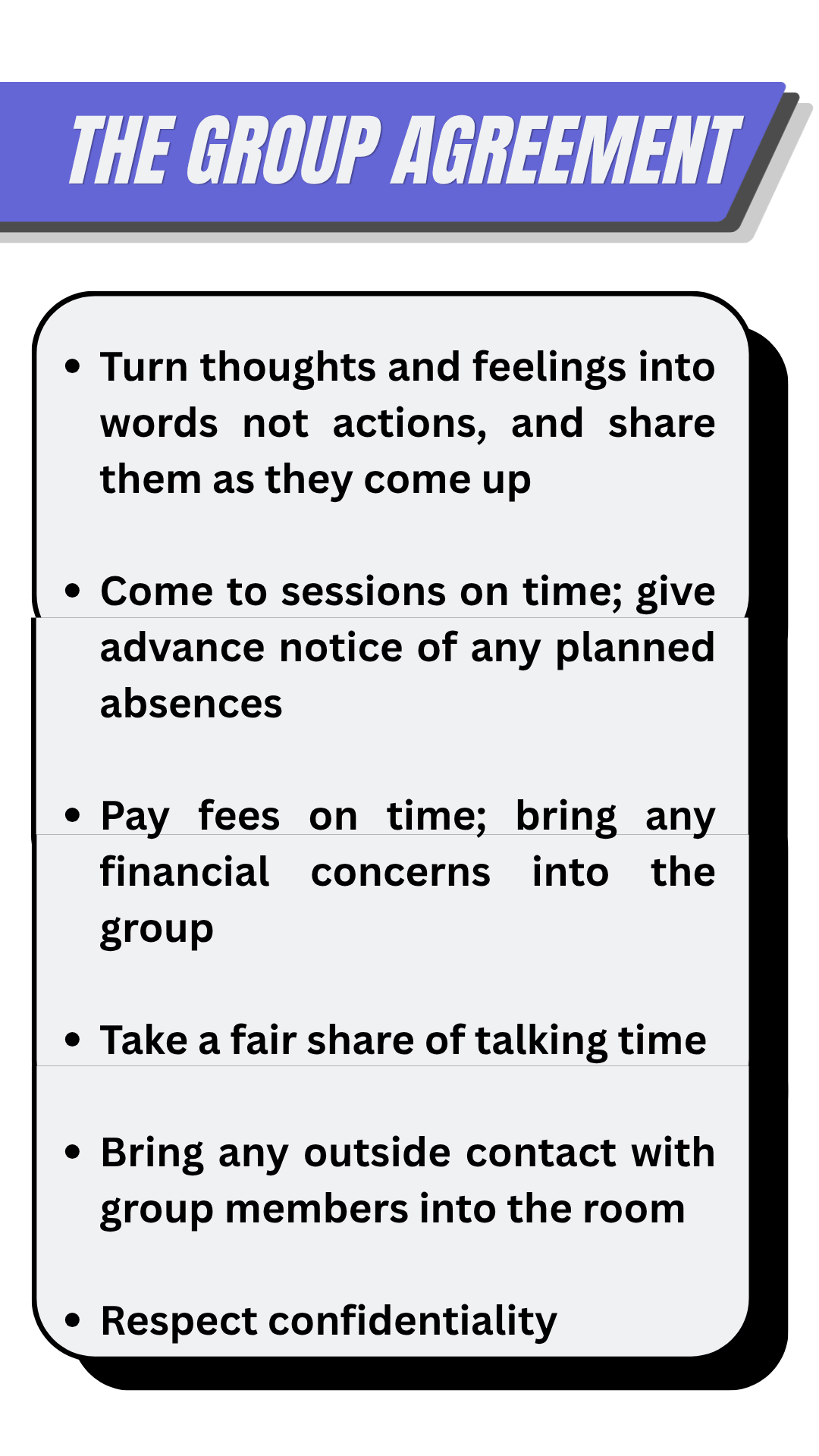
As a reminder, one of the agreements is that everyone uses a fair amount of time.
If you already have a group agreement, it allows you to handle any problematic behaviors, including when someone isn’t using a fair amount of time. If you don’t have one, it’s a bit trickier, but you might want to introduce it. When I worked in residential centers, I reviewed the agreement every time a new client joined.
This doesn’t mean you go at the monopolizer directly with a comment like:
- "Jimmy, you’re breaking the group contract."
- Or "Jimmy, you agreed to use a fair amount of time."
That would be excessively direct and confrontational. Instead, I suggest you ask the group,
- "Does anyone want to respond to that?"
That approach is too passive, and no one will want to respond. Instead, be direct. Choose someone in the group who is comfortable sharing their feelings or isn’t intimidated by the monopolizer, and try something like this.
- "Before you go on too much more, Frank, I want to check in with Jenny - I wonder if Jenny has a hunch as to what Sarah's feeling right now? I noticed she was looking at her watch,"
If you don’t have that golden member of the group, try something like:
- "Who else has been sitting with something this last few minutes?"
You're not shutting the monopolizer down directly, but you're giving the group space to express its emotional experience while Frank’s been telling that long-winded story.
The Trap
I’ve mentioned this before, but the main trap to avoid is confronting the monopolizer directly, especially if you’re feeling frustrated.
Even if you’re not annoyed, it might seem logical to address the issue since the person isn’t following the agreement. But if you do, you risk giving the monopolizer all your attention as they argue, negotiate, or get upset, which lets them take up even more of the group’s time.
The monopolizer needs to hear what the group feels and how they respond to being bulldozed.
Your job is to make it possible for the group to respond, and directly managing the monopolizer doesn’t allow for that.
I’d love to hear if you have other ways to handle monopolizers or any questions about my suggestions. Please leave a note in the comments.
Until next time,
Oliver & My People Patterns




Responses