

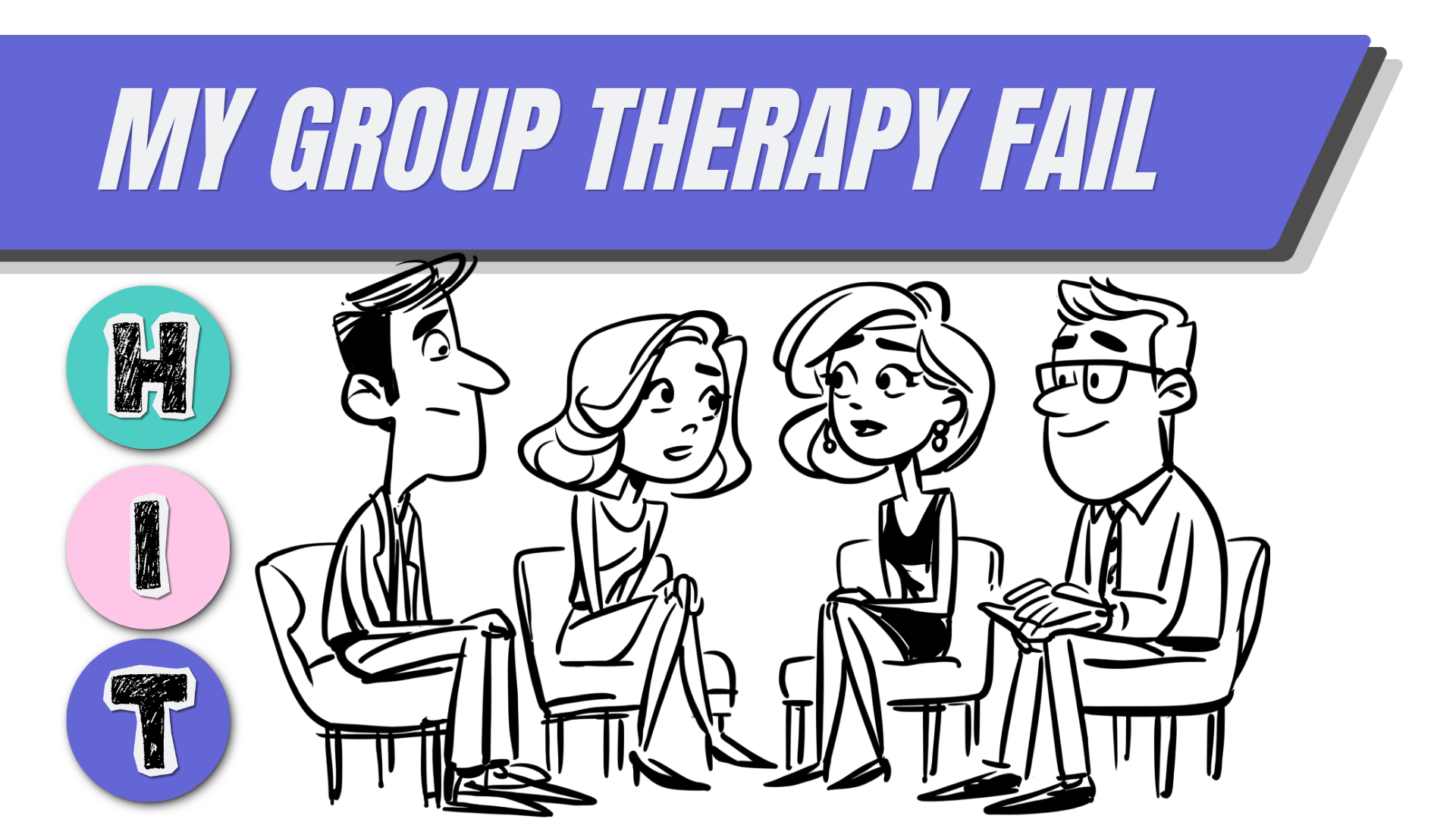
I want to share something I did during my first group session that still makes me cringe when I remember it.
At the time, I thought being a good group leader meant spotting patterns and saying them out loud. If someone interrupted, avoided, or blamed, I would call it out and mention what others weren’t saying.
Luckily, my training helped me realize this was a habit I needed to change.
In my first group, there was someone I’ll call Jimmy who talked nonstop. He also had a habit of turning every conversation back to himself whenever others tried to share. This really frustrated me, so I would interrupt and ask him to stop because I really needed him to change and be a ‘better’ group member.
The problem was that my interruptions and redirects were driven by my annoyance, and the only impact they had was that Jimmy was hurt, and, even worse, he didn’t gain any insight, and we didn’t explore the defense or impulse that kept him talking.
Why That "Correction" Did Nothing
My training in Modern Group Analysis taught me something important about trying to fix group members’ problems too quickly. There are two main ways this can happen.
- The first way is when we think a group member has a problem, but it’s not really a problem. Sometimes we see behavior as an issue just because it’s unfamiliar to us, not because it’s unhealthy. I could say maybe I was the only one bothered by Jimmy’s talking, but I’m pretty sure that wasn’t true.
- The second way is trickier. Sometimes the behavior really does need to change, and we rush in to fix it. It feels like the right thing to do as a therapist. But I need to make sure the client is ready before I give feedback or stop someone from talking. If they’re not ready, the more I do, the less the group member learns.
The Theory.
If you point something out too soon, you only stop the surface behavior and don’t let the person or group look into it. Even worse, I made Jimmy’s very obvious pattern disappear before the group could talk about it or confront it.
What To Do Instead
So if correcting isn’t the answer, what should we do? Honestly, it’s not very satisfying, but we have to wait and let things play out.
- We wait to see if it’s just a one-time thing or if it keeps happening,, which would make it more likely to be a pattern. Waiting also helps to check whether I was just having a bad day and was generally annoyed, not just at Jimmy.
- Waiting gives the pattern time to show up so the group can notice it. Ideally, the group will get as frustrated as I was and want to speak up to Jimmy. But if the group is afraid of Jimmy, they probably won’t say anything, so in that case, don’t wait.
- When you’re sure the group feels frustrated or irritated and you see a pattern, that’s when you help the group confront Jimmy.
- The Bad Version
This is to illustrate the point of the group agreement. This is not something I’d say, or you should say!!
- “The group agreement says we are going to use a fair amount of time, and Jimmy isn’t. I’m curious as to what’s going on that the group hasn’t brought this up?”
5. The Better Version
- "I noticed something going on in the group, and that is no one is sharing their emotional reaction to what Jimmy is saying.”
This helps the group focus on the feelings they’ve been avoiding or not expressing, which is what the group agreement asks them to do.
6. The Alternative Version.
If I knew someone in the group could handle this, understood Jimmy, or had dealt with a similar issue, I might ask them to help by bridging to them.
- “Before you continue with that story, Jimmy, I want to ask Nicky a question - Nicky, I’m wondering if you have any thoughts as to why Jimmy doesn’t seem to want to hear the group’s reaction to what he’s saying?
The Moral Of The Story.
Here’s what I learned: confronting a group member directly, especially when I’m annoyed, always backfires.I ended up giving Jimmy all my attention and spending more of the group’s time on him, which only made the problem worse.
Jimmy didn’t need more attention from me. What he really needed was to hear how the group felt about him bulldozing the session. My job was to give the group space to share and help Jimmy see what he was doing.
I’d love to hear your thoughts. In your last group, did you ever step in to fix something the group could have handled? Please let me know your experience in the comments!
Until next time,
Oliver & My People Patterns



Responses