
Practical & Free Family Therapy Worksheets, PDFs & More.
Updated 9.30.26.
A curated collection of family therapy worksheets, PDFs, and practical tools for therapists, counselors, and anyone curious about family systems therapy.

Why Download These Family Therapy Worksheets?
Family therapy can feel complex, emotional, and at times completely overwhelming, it's no wonder that only 10% of therapist's chose to work with families..
That’s exactly why practical tools and worksheets can really make a difference.
The family therapy worksheets we've created are designed to help you move from theory into action, or to solidify your conceptualization and get even clearer on the theory.
Whether you’re working with conflict, communication breakdowns, or dynamics with rebellious teenagers,, having structured ways to think about the case can make sessions more focused and effective.
If you’re like many therapists, you probably rely on models like Structural, Strategic, or Bowen Family Systems. The theory is powerful and needed but it can feel abstract or unhelpful unless it's being applied in a practical way.
That’s where these worksheets come in.
On this page, you’ll find:
- Practical family therapy worksheets you can use immediately
- Downloadable PDFs for sessions or homework
- Activities that support real behavioral and relational change
Think of these resources as the bridge between theory and real-world progress. For more Family Systems Theory Training, check out my course that takes you through structural family therapy sessions one step at a time.

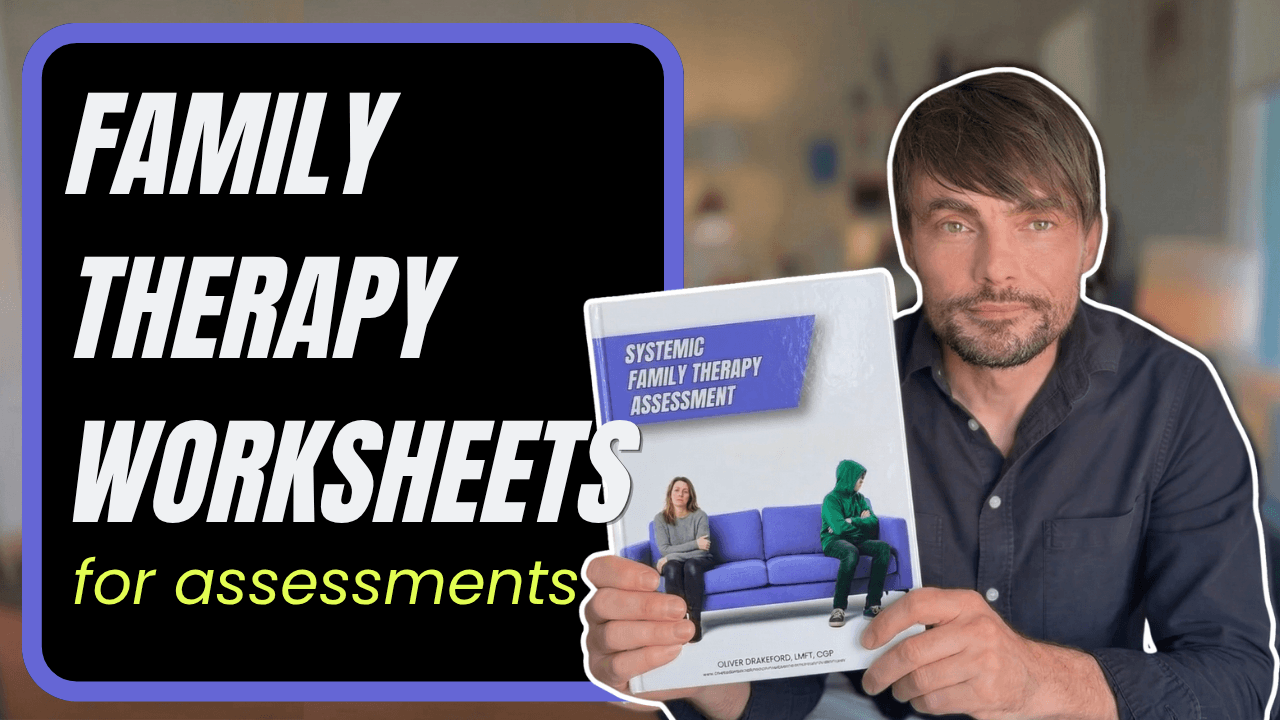
Family Therapy Worksheets
Download the free family therapy worksheets and start assessing families with structure, not guesswork. Six chapters, 8 tools, and a whole lot more confidence when it comes to starting to work with families
Free






Family Systems: HiT
I send out a weekly free family systems / family therapy newsletter. I'm determined to make it the most helpful practical email you get all week. Its fun, free and for clinicians of all levels of experience. Family Systems HIT: How To's - Interventions - and a little bit of theory.
Free
Join Our Free Family Therapy Newsletter
I'm determined to make this Newsletter the most helpful email you get all week, so I spend a lot of time trying to make them helpful, informative and practical.
You can expect each week to get an email that contains handouts, worksheets, PDF's and cheat sheets all related to family therapy and family systems. The goal is to help you help the families you work with.
Signup for free and unsubscribe at any time.
What is Structural Family Therapy?
Structural Family Therapy is a widely used approach that focuses on how family relationships are organized—and how those patterns impact behavior, communication, and emotional wellbeing.
Instead of looking at individuals in isolation, this model examines the structure of the family system:
- Who holds authority
- How boundaries are set
- How members interact with each other
The goal is to identify unhelpful patterns and restructure them in a way that supports healthier relationships.

Why it matters in practice
Every family is different. Even when two families present with similar challenges, the underlying dynamics can be completely unique. That’s why therapists need more than just theory, and also why I found that theory is so helpful.
While Structural Family Therapy provides a strong framework, real progress often comes from applying it through:
- A well thought out hypothesis
- Deep understanding of the family structure.
- Structured questions that turn theory into action.
Many experienced therapists find that translating theory into practice is the hardest part. So using the family therapy worksheets I created can help by:
- Making abstract concepts more concrete
- Guiding conversations during sessions
- Helping turn observations into understanding.
Below, you’ll find a curated set of Structural Family Therapy worksheets and tools designed to support this process.
Structural Family Therapy Worksheets
(PDFs, Activities, and Session Tools)

The Subsystem Scan Framework

The Family Boundaries Worksheet

The Identified Patient Checklist Tool

The Hierarchy Scan Worksheet

The W.I.R.E.S Checklist & Worksheet

Family Mapping In Structural Family Therapy
My Top Three Structural Family Therapy Videos

Your First Structural Family Session.
I walk you through the OPEN Framework.
A four-step assessment map based on the work of Salvador Minuchin.
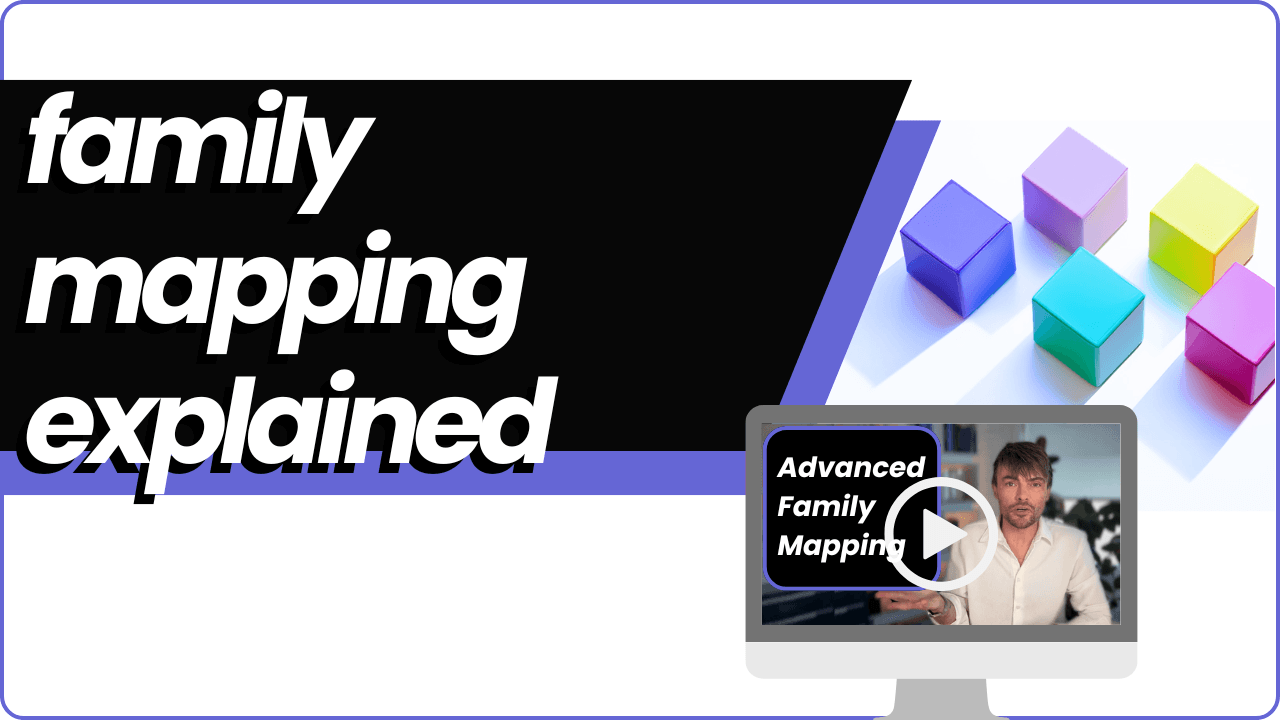
Structural Family Mapping Technique
My favorite of all tools in the Structural Family toolbox.
I'll teach you how to create a family map and what you cal learn from them

Circular Questioning In Family Therapy
See how I use circular questioning in my first few family therapy sessions to find out more about the system.
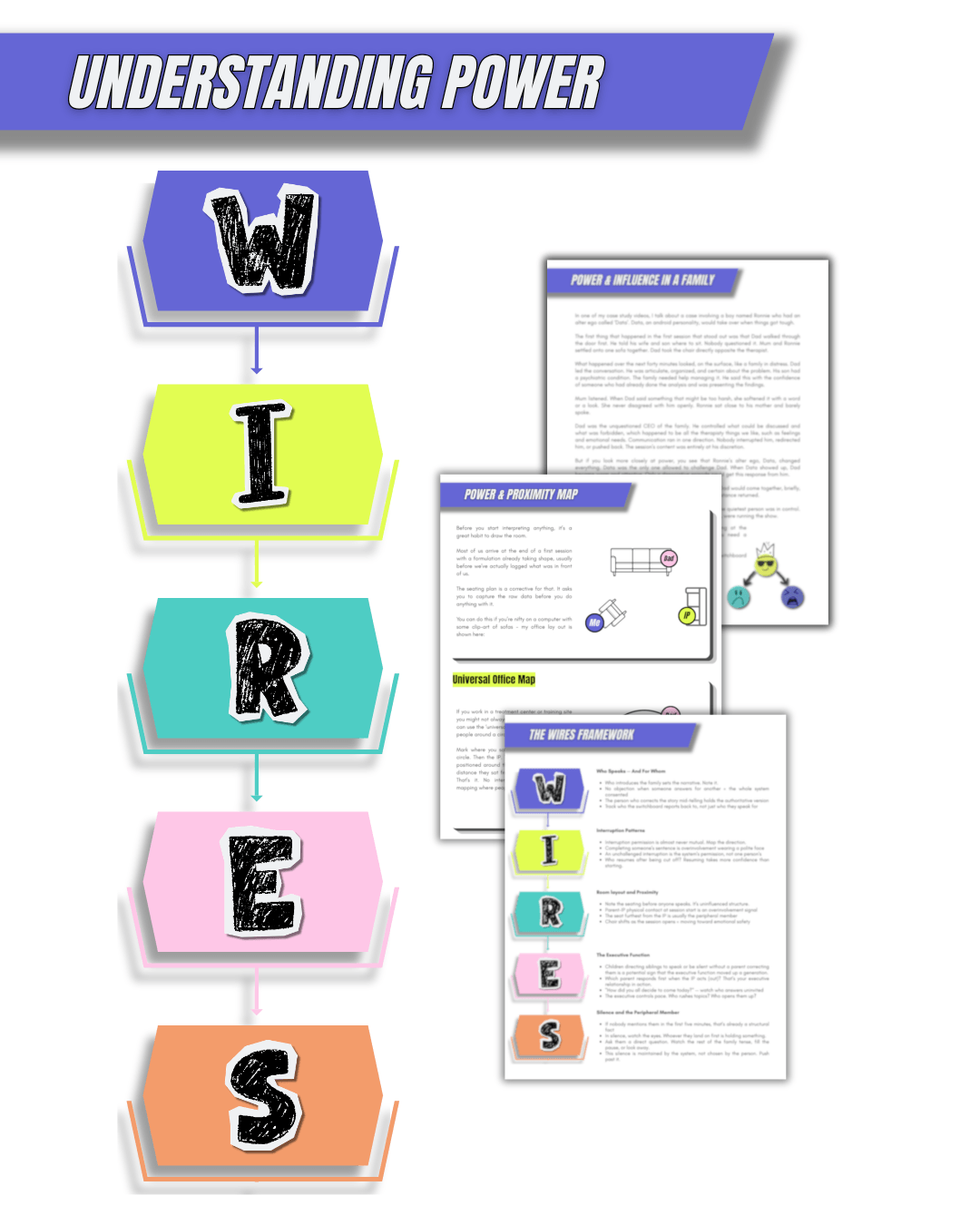
Family Therapy Worksheet: Mapping Power and Hierarchy (WIRES Framework)
The WIRES Framework is a practical family therapy worksheet for identifying power dynamics and decision-making roles within a family.
In many families, authority is not openly discussed—it’s performed. The person who speaks the most is not always the one with the most influence.
When therapists misread this, interventions often fail.
The WIRES Framework helps you observe real power by tracking behavior instead of relying on what family members say.
With this worksheet, you will:
- Identify who holds decision-making power
- Track communication patterns (interruptions, alliances, silence)
- Locate where authority actually operates in the system
Download the worksheet to uncover hidden hierarchies and intervene more effectively. Find out more about hierarchy in family systems therapy here.
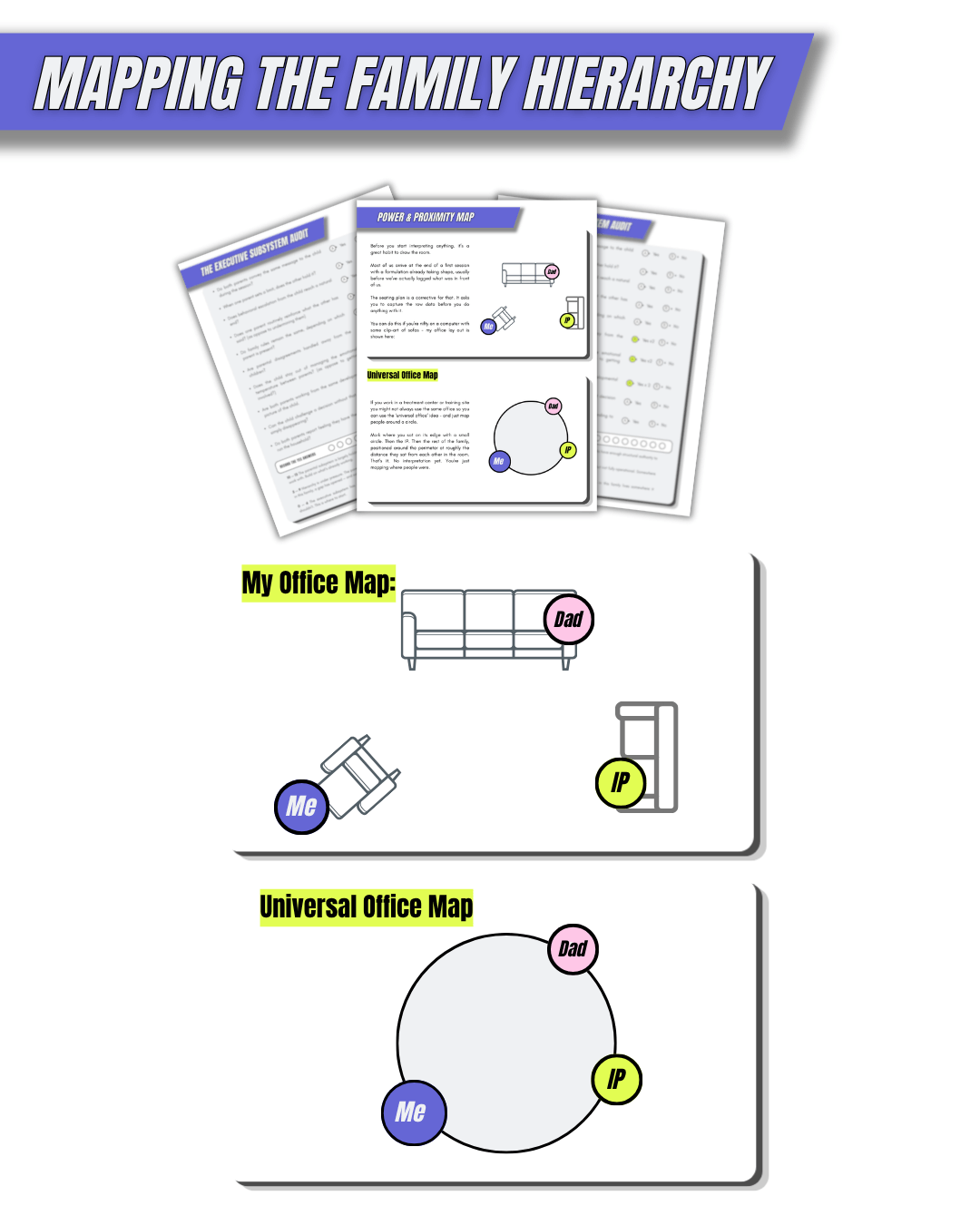
Family Therapy Worksheet: Understanding Family Structure and Subsystems
This family therapy worksheet helps you assess family structure by mapping key subsystems: the couple, the parents, and the siblings.
Sometimes interventions fail not because they’re wrong—but because they’re aimed at the wrong level of the system.
For example, a child’s symptom may be stabilizing tension between caregivers. Addressing the symptom alone can threaten the family’s current balance.
That’s why structure matters.
The Subsystem Scan helps you identify where boundaries are unclear and which subsystem needs attention.
With this worksheet, you will:
- Map core family subsystems
- Identify boundary issues between roles
- Target interventions more precisely
Download the worksheet to align your interventions with the actual structure of the family.
Structural Family Systems Therapy: Family Mapping Tool
Watch the video and download the accompanying slides and handouts by signing up for our mailing list below.
- Family Mapping for Clinicians
- Observational Family Assessments
- Family Mapping Intervention
Download The PDF
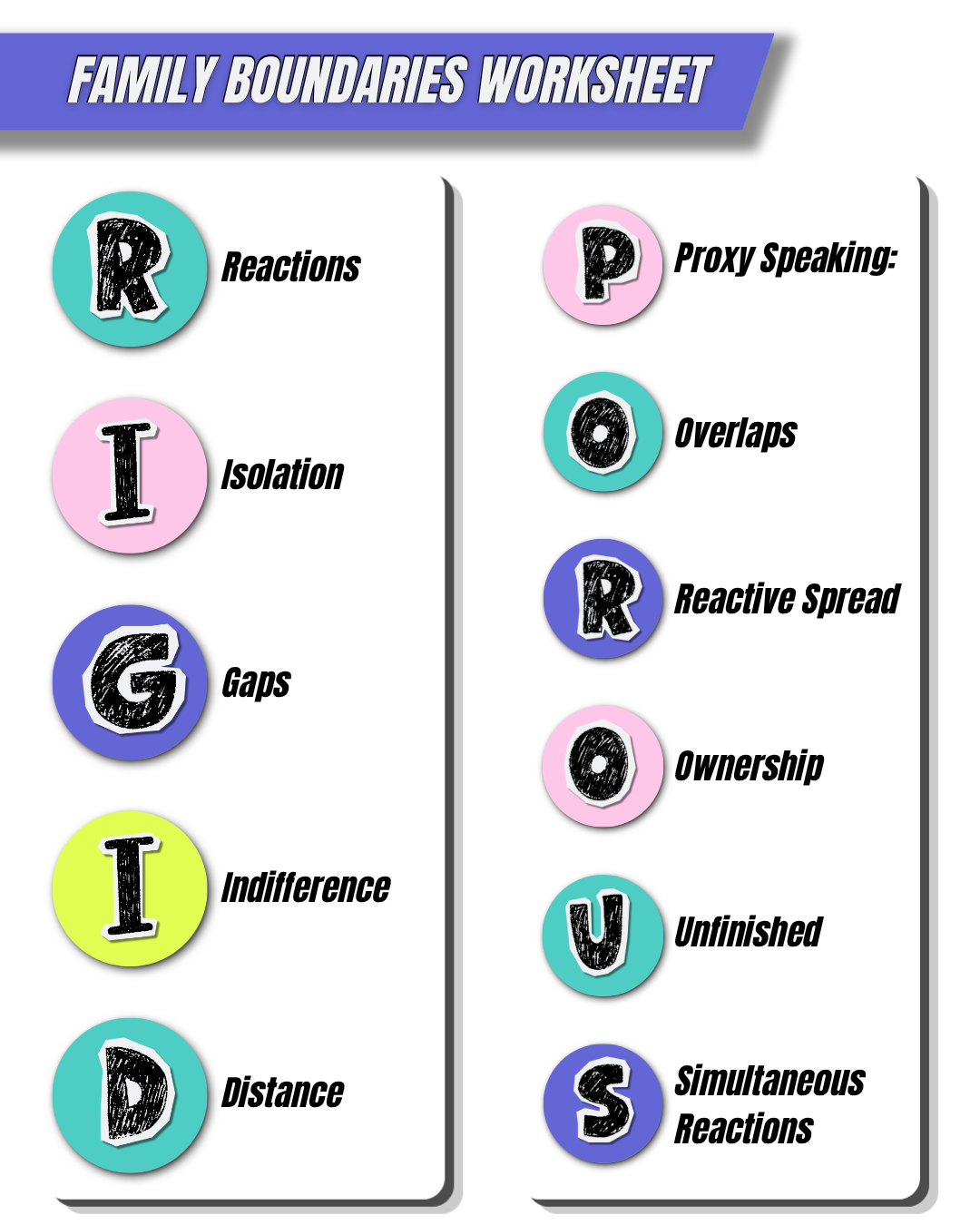
Family Therapy Worksheet: Assessing Family Boundaries (Rigid vs Porous)
You know what boundaries are, and you know the different types - porous, rigid and healthy... but do you know all the ways to accurately asses for them?
This family therapy worksheet helps therapists assess whether family boundaries are too rigid, too porous, or appropriately balanced.
At first glance, closeness can look like connection—but it may reflect enmeshment. Likewise, distance can signal independence—or emotional disengagement.
Misinterpreting these patterns can lead to ineffective interventions.
The RIGID and POROUS boundary checklists provide observable markers to guide your assessment.
With this worksheet, you will:
- Identify enmeshment and disengagement patterns
- Track emotional boundaries between family members
- Build healthier separation and connection
Download the worksheet to accurately assess and reshape family boundaries.
Experiential Family Therapy Techniques & Worksheet PDF.
Family Sculpting is the ULTIMATE in experiential family therapy techniques and during Covid, my team and I created a way to do it without the family or a group! Watch this video to see how I do both activities.
Watch The Video
Family Therapy Worksheets
Download the free family therapy worksheets and start assessing families with structure, not guesswork. Six chapters, 8 tools, and a whole lot more confidence when it comes to starting to work with families
Free

