
Have you ever left a session and called it "tense" or "charged," but then found it hard to explain exactly why in clinical language?
I hope I’m not the only one!
In this newsletter, I want to give you more clinical language to describe why a room sometimes feels off or to explain a vibe more clearly.
- You can listen to the audio version of this on Spotify and I think also Amazon and Apple Podcast too under 'Family Systems In 15 Minutes'
- I've added a bonus intervention to the audio version too.

Communication Styles
Communication theory suggests that whenever someone speaks, they take a position about power or status. The communication shows if they see themselves as higher, equal, or lower than the person they’re talking to - sometimes intentionally, and most often unconsciously.
As therapists, we’re probably aware of this. In early sessions, we often try to show equality by not being too pushy, even though we know there are power dynamics given our roles and training.
A big part of building a therapeutic alliance is showing equality in the relationship. We do this by:
- Building on what someone said rather than correcting it or just agreeing with it.
- Offering our perspective as a view rather than as a conclusion.
- Asking a question because we are curious or we genuinely do not know the answer.
Sometimes, we need to take a higher status and might interrupt or redirect on purpose. We also take a higher position without meaning to when we do things like:
- Correct someone’s assertions or faulty thinking.
- Define the end of a session at the 50-minute mark.
- Instruct, advise, or give homework.
There’s nothing strictly right or wrong about this, and it’s often unavoidable. The same ideas apply when family members talk to each other.
Status In Family Communication
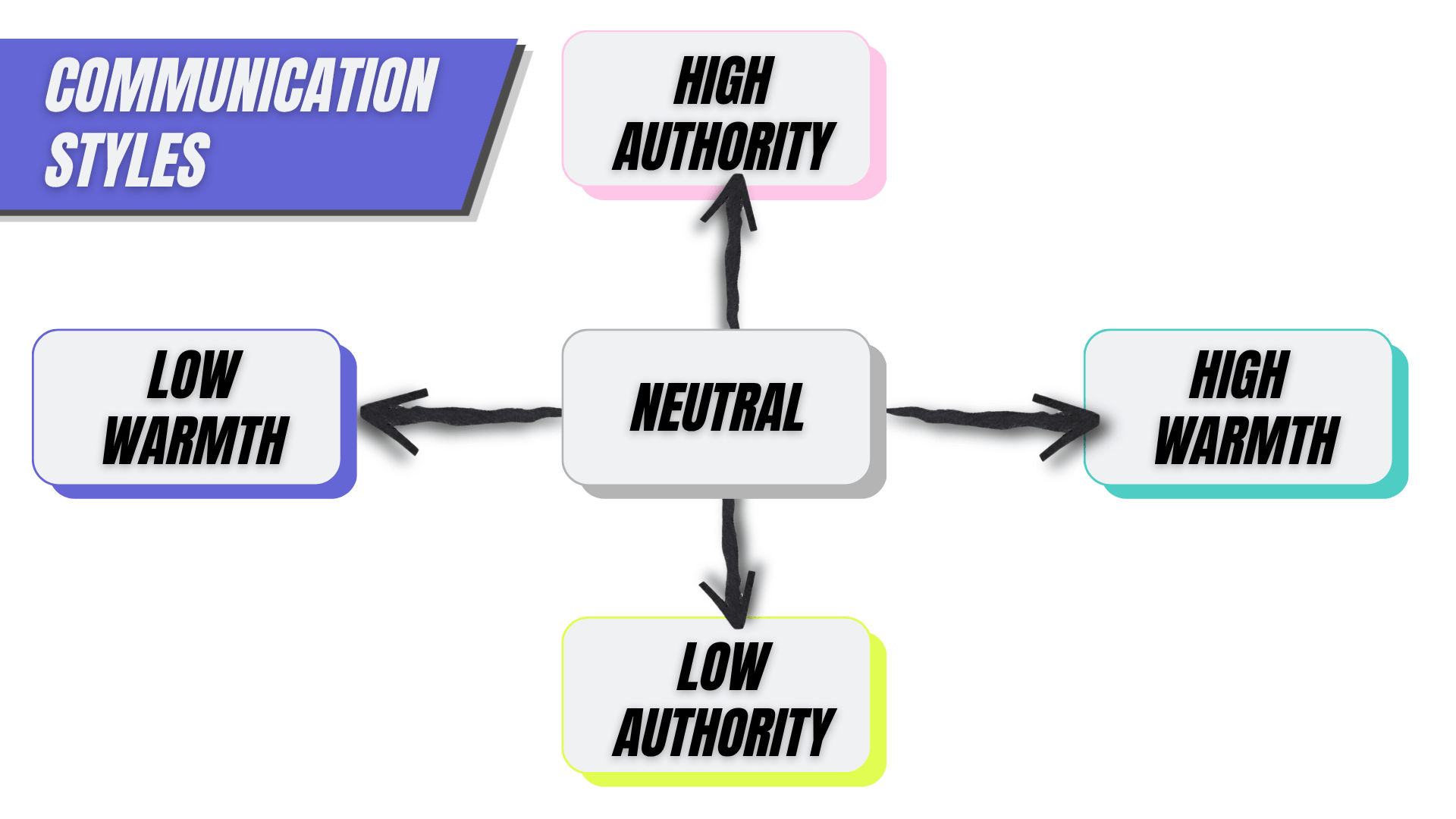
When it comes to families and couples, it’s helpful to think about this spectrum of power on an axis, and again, there’s nothing inherently wrong with asserting a higher, lower, or equal status:
- A parent can correct a child warmly, and it is still a high-status move.
- A partner can reframe an argument kindly and still be placing themselves above the other person in that moment.
In the same way, parents and partners can show lower status by agreeing, following, or deferring to someone else. It’s normal to accept someone else’s lead instead of taking your own.
It’s important to notice status moves in a session because people often don’t realize they’re making them. Someone might spend forty minutes directing or correcting, thinking they’re just helping. Their intent is kind, but not being aware of power can make it feel different.
I’ve worked with many families where one parent often ‘man-splains’ to their teens, and I see the teens zone out or shut down right away. The parent’s information might be helpful or wise, but the teen reacts to the parent’s authority, which can trigger a strong response.
Warmth In Communication
The second thing every conversation shows is warmth, or sometimes a lack of it.
If status is about position, warmth is about your emotional attitude toward the other person. It can be positive, neutral, or hostile. Like status, it’s a separate signal in the conversation.
Someone can have a high status and still be warm. Someone else might agree or follow along, but still send a cold signal beneath the surface. These two signals don’t cancel each other out; they just exist together.
Warmth is often the signal that actually lands family communications - many a parent will tell me they asked their teen to take the trash out, only to have their teen blow up at them. The parent will tell me they ‘just reminded them to do a chore’, but the teenager reacted to a tone that conveyed contempt or irritation. The teenager responds to the contempt, while the parent insists it was just a reminder.
Both things are true at the same time.
The sharpest examples are when warmth and words go in totally opposite directions. I’m fascinated by the southern phrase ‘Bless your heart,’ which can mean many things, even “go screw yourself”, but it’s always said with a smile!
(FYI, the British version of this is ‘I’m terribly sorry’. Which means you’re an asshole, or I made a mistake, or WTF, depending on the person or situation)
Of course, this can go in the other direction; you’ve likely seen family members use warm, cooperative language while being quite controlling. The delivery is so pleasant that neither the family nor the therapist immediately clocks the status move underneath.
- "That's brilliant, and you know what would make it even stronger..."
The warmth and encouragement are real. But the parent is still putting themselves in the role of the one who can see further, add something, or improve the child’s thinking.
Neutral warmth is its own category. These are words expressed that have no emotional attitude toward the other person. In couples, this pattern is often well established by the time they come to therapy, and both partners may not even notice it anymore. But it shows there’s an emotional disconnect or the dreaded roommate phase of a relationship.
Reading The Room
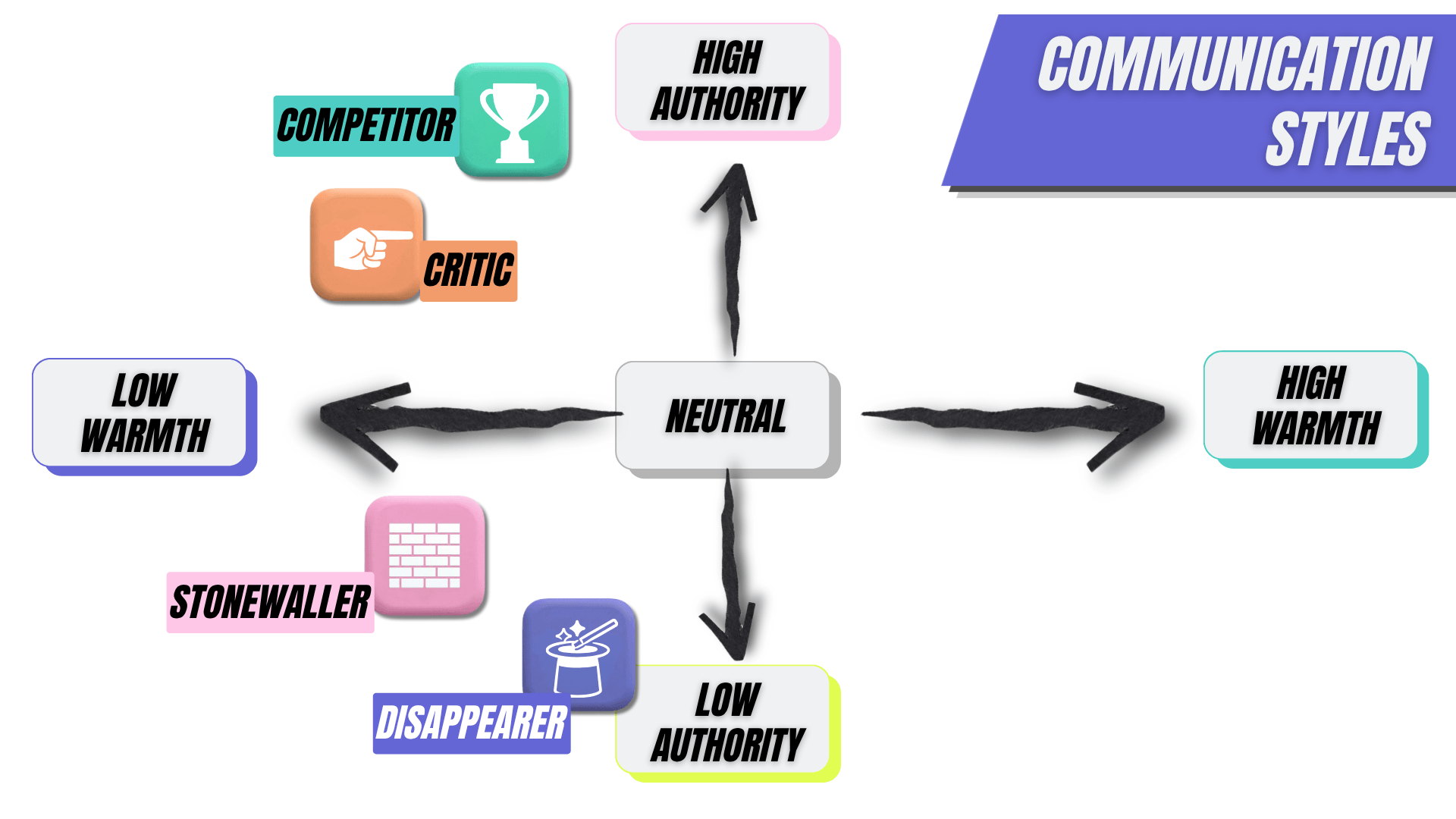
When you put these two axes together, you get a kind of compass.
I normally love a 2x2 matrix, but in this case, it needs a warning note as it might imply you sort people into boxes and keep them there. That is not what this is, because communication in this regard is more like a compass that tells you where something is at a given moment, and that it changes.
The same parent can be in four different positions across the course of a single session. What you're tracking is not a personality type. It's a coordinate, and coordinates move.
How To Use It
The vertical axis is status, and I’d encourage you to start there because it's harder to recognize.
The horizontal axis is warmth, which is where to go next.
Where those two meet in any given exchange tells you what kind of relational move just happened.
The two-question sequence to figure this out is:
- Is the communication warm or hostile?
Most of us already feel this easily; we know when a room has shifted from warm to hostile, and this framework just gives you something more precise to do with that feeling once it lands.
The second question
- Is the communication coming from above or below?
It might not be as obvious as a lack of warmth or picking up on hostility, but it’s just as important to sort through.
Why It’s Helpful
"The room felt tense" is something I often tell colleagues or mention in consultations, even though it’s not really a clinical observation. But describing tension using these two questions gives it more clinical and structural meaning.
Tension From Above
Tension can come from someone taking an authoritative stance and directing hostility downward—like correcting with an edge, attacking, finding fault, or claiming the right to define what’s true.
Families often organize around this pattern quite visibly, and it usually gets named early in treatment because it is hard to miss. This communication style needs the therapist to interrupt the downward pressure, to name what is happening, and slow it down.
Tension From Below
Tension can also come from below, when someone withdraws by going quiet. They might obstruct without saying so, resist without moving, and become harder to reach, all without actually doing anything wrong.
Families often don’t name this pattern because there’s nothing obvious to point to. The therapist’s job is to get curious about what the withdrawal is protecting, since it’s almost always a response to some form of hostility above.
Mapping Red Flags In Communication Styles
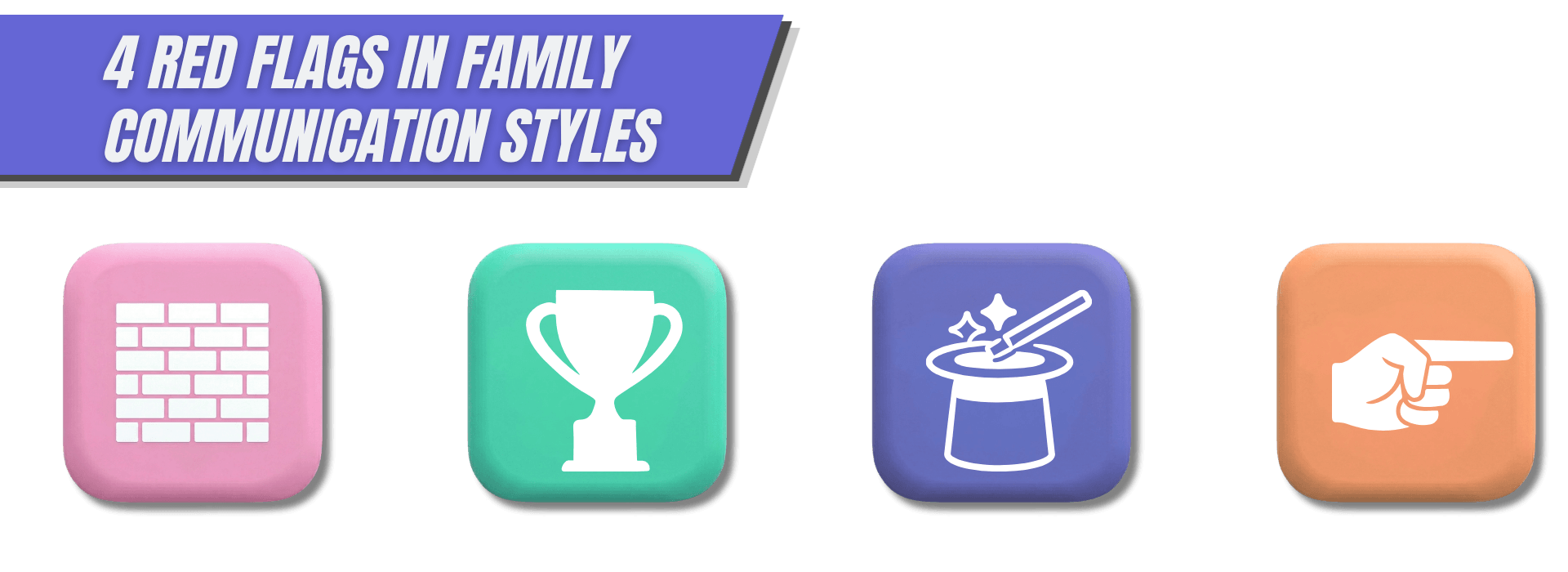
Obviously in family therapy sessions, we're looking for communication styles that lack warmth or have overt hostility in them, but this compass gives us more options. In fact there are 8 or so positions worth noting and I'll do a sequal to this with the other four, but for now the big red flags are below.
The compass doesn’t tell you what to do, but it helps you see what’s happening in the room and where each family member is. That’s usually enough to take a helpful next step or at least know when there are red flags worth pointing out.
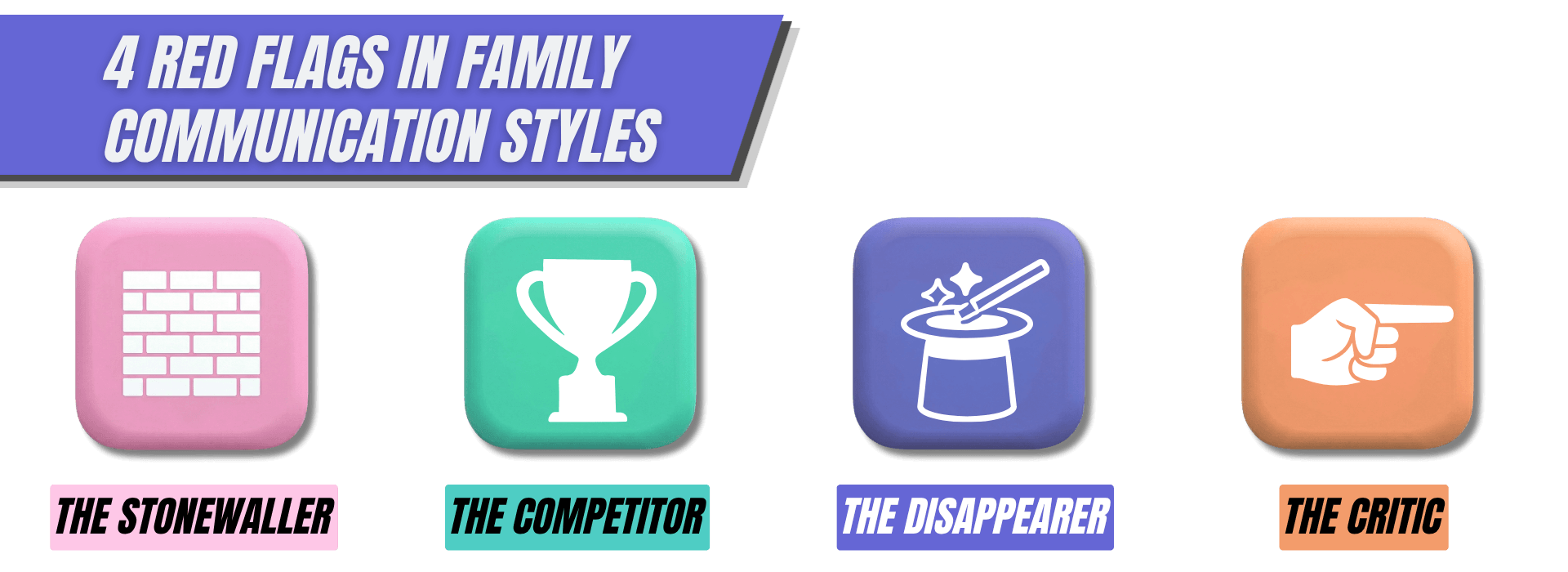
The Competitor:
High status, slightly negative warmth.
The hostility here is mild because it’s not aimed directly at the other person. It’s more about being competitive than attacking—elevating oneself, outranking, or exploiting the gap. In families, this often looks like a parent who can’t let the teenager be right, not to hurt them, but because being above feels necessary.
The internal line is "I'm above this."
The Critic:
Moderate to slightly high status, fully negative warmth.
Status is moderate, but warmth is completely cold, putting this near the hostility pole on the compass. The move is direct: criticize, attack, or find fault with the person or their idea.
Families can usually name this pattern when you ask. It’s the easiest to spot because the hostility has a clear target.
The internal line is "you're wrong, you're bad."
The Stonewaller:
Low status, negative warmth.
The Stonewaller has the same cold warmth as the Critic, but the opposite status. While the Critic pushes down, the Stonewaller resists from below—balking, obstructing, being hard to please, or withholding without explanation.
Families often can’t name this one because there’s nothing obvious to point to. Someone is just difficult to reach and has been for a while.
The internal line is "no, and I won't tell you why."
The Disappearer:
Low status, neutral to barely negative warmth.
This is at the bottom of the hostile side, but the hostility has almost faded away. The person gives in, fades into the background, shows weakness or inability, and withdraws without a fight.
There’s no contempt or obstruction—just someone who has stopped showing up. It seems passive, checked out, or easy to miss, which is why it often goes unaddressed in a session.
The internal line is "never mind me."
Next time a session feels tense and you can't quite put your finger on why, try running those two questions. Warm or hostile.
Above or below. It won't always tell you what to do, but it'll tell you what you're looking at — and that's usually enough to take one useful step.
Until next time.
Oliver
PS - Another free resource is my Family Therapy Worksheets page - a 60 page pdf on systems assessments.


Responses