
I moved from London to Los Angeles in my twenties and effectively drew an 8,000-mile boundary between us. If you'd asked me then, I'd have called it a career move, but it took eight years of my own four-times-a-week psychoanalysis to work out what an 8-hour time zone, an ocean, and a continent actually did to my relationships.
It created space, but it changed none of the dynamics, and this came up the other week while reading an article in The Wall Street Journal.
It’s a fascinating article published a couple of weeks ago claiming that therapists are causing family estrangement. One of the talking points says that one in three estranged parents surveyed believe a therapist influenced their child's cutoff.
I can’t help but think it’s connected to how easy it is to self-educate and to therapists' reluctance to challenge and confront, but when it comes to cut-off and distance, family systems theory can give us some guidance.
The Problem
I’ve definitely noticed in the past few years that clients increasingly arrive with their own diagnoses and speak in pseudo-clinical terms. Clients have pre-labeled their family members or ex-partners as ‘toxic’ or ‘narcissistic’ and subtly check to see that you agree.
I’m totally part of the problem as someone with 13,000 followers on YouTube, and fully aware that social media and AI have handed the public clinical vocabulary to learn on demand. But these technological advances don’t give them the assessment tools or training we’ve had to use the words correctly, and that might be the real issue.
Now I don’t think there’s a secret movement of therapists pushing estrangement or cosigning every problem a client brings in, but I won't fully let us off the hook either.
We’re taught to meet the client where they are and provide unconditional positive regard and reflection. Somewhere in that instinct hides a different move: believing the account in its entirety.
I’m also not saying clients are lying to us, but some clients come to therapy wanting and needing someone to believe them and support them, and it’s easy and rewarding to do that. That need is for clinical information, and it’s absolutely part of our job to provide it, but another part of the job is to help a client grow and develop by pointing out defenses, contradictions, and blind spots.
A conflict-avoidant therapist will validate well and skip the part where we have to hold up the mirror and explore what the client would rather not look at.
Consider my personal issue with the overuse of the word ‘trauma’; I do literally shudder sometimes when I hear it. These are somewhat real explanations clients have given me for why their childhoods were traumatic.
- My childhood was traumatic because my father worked a lot.
- My childhood was traumatic because we moved a lot.
- My childhood was traumatic because my parents were poor and we didn't know where each meal was coming from.
- My childhood was traumatic because one of my parents had an active substance abuse issue.
- My childhood was traumatic because I grew up in a warzone with bombs dropping.
One word cannot mean the same thing to us as clinicians without probing what the client means by it.
Now, I’d never dream of telling a client their pain isn't real or that I don’t believe them, and I also won't accept someone’s very challenging childhood as being the same as a harmful, unsafe, or unhealthy childhood without exploring it.
FYI, if I’m in doubt, I often think of the Adverse Childhood Experiences questions, which are clinically grounded and evidence-based, and not one of the ten questions is about a parent who worked too much.
THE SOLUTION: PAUSE
Before I agree with a client’s description of unhealthy family dynamics or jump on the ‘no-contact’ bandwagon, I run five questions.
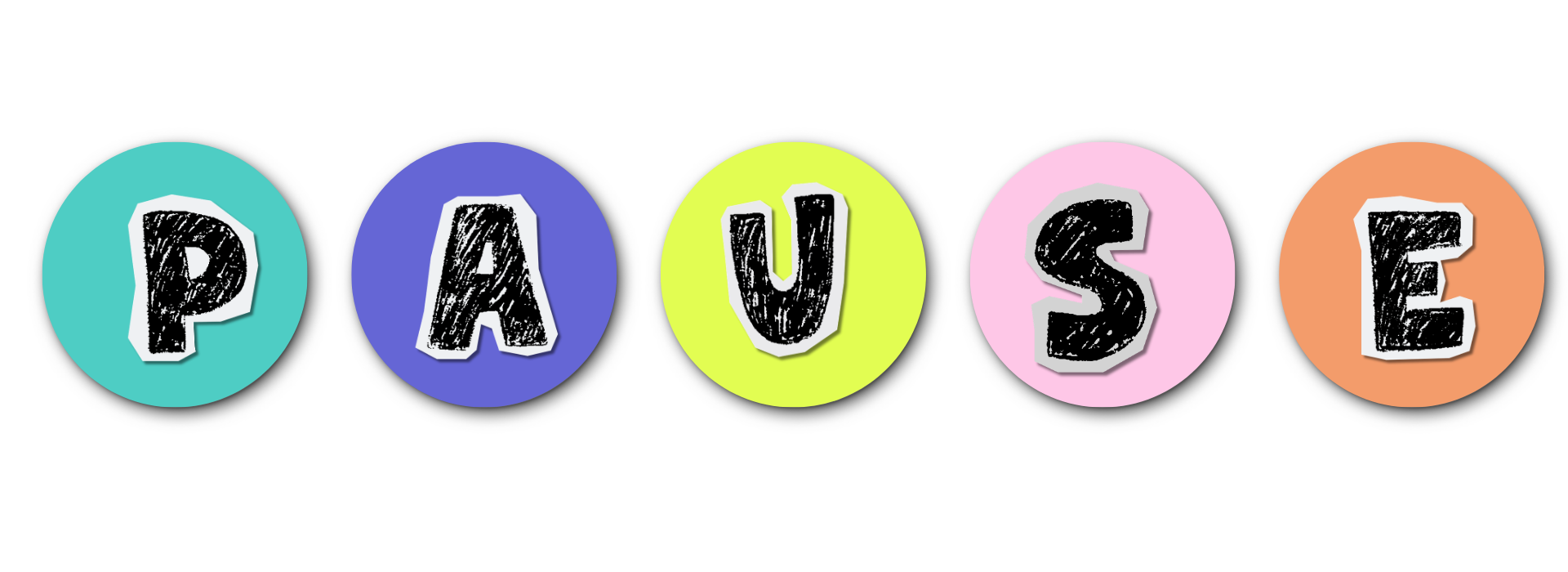
They happen to spell PAUSE.
P: The Pattern.
- What are the dynamics that feel so oppressive or threatening?
A label like "toxic" tells me how the client feels but almost nothing about what happens between these two people. So I ask for the ordinary version. What does a phone call with your mother actually sound like? What happened the last time you visited?
A: The Attempts.
- What have you tried in the past?
- What worked, and what didn't?
In my experience, a lot of people who want to cut off family don't want to have what is essentially a very challenging conversation, or they were never equipped to have it. Going no-contact can be the move that spares them from ever learning how.
A client who has spent years telling her father directly that his comments wound her and has watched nothing change is in a very different place from a client who has never once said it out loud. Both may use the same word for the relationship. The history of attempts tells you whether the system was given a chance to respond.
U: The Upstream.
- Who else in the family has gone no-contact?
- What does this look like generationally?
Estrangement rarely invents itself from scratch. If an aunt vanished twenty years ago and a grandparent stopped speaking to a sibling over a will, then cutting off may be this family's standard tool for handling conflict, passed down as faithfully as a recipe.
That doesn't make the client's pain less real. It does mean the decision in front of you might be less of a boundary and more of an inheritance, and the client deserves to know which one they're choosing.
S: The Standing.
- What are the power dynamics at play?
The question underneath is why this client feels that the only way to get some equality is to not speak. For some people, silence is the only veto they have ever held in that family. Every conversation gets steamrolled, every objection gets outvoted, and disappearing becomes the one move nobody can override.
When that's the shape of it, the cutoff is solving a power problem, and there may be other ways to solve it. What would it take for this person to have a voice while staying in the room? That question often opens more than the contact question does.
E: The Ends.
- Is this punitive or an anxious reaction to difficult relationship dynamics?
This is the question the other four have been preparing. A healthy boundary protects something the client is building. A punitive cutoff targets someone and keeps the client organized around the very person they're trying to leave.
Cutoff and enmeshment are two sides of the same coin. When we feel smothered or engulfed in a relationship, we put boundaries down, but boundaries so rigid and impenetrable that nothing passes through create a problem of their own. The solution to both is usually to tolerate very uncomfortable feelings, understand our reactions to others, and maintain our sense of self. Distance can create the space to do that work.
As I learned with an ocean between London and me, the space alone doesn't do the work for you.
Oliver


Responses