
You might have heard people say that ‘group becomes your family’. It means that each member of your group reminds someone else of their father, mother, or sibling.
Most people don’t talk about these family associations, but they are still present in everyone’s mind. This transference quietly affects how much members speak, how much they trust the feedback, and whether they get involved or hold back.
In a way, your group members have brought their families into the group too.
Many of us therapists understand this idea in theory, but not as many of us use it on purpose to help our clients.
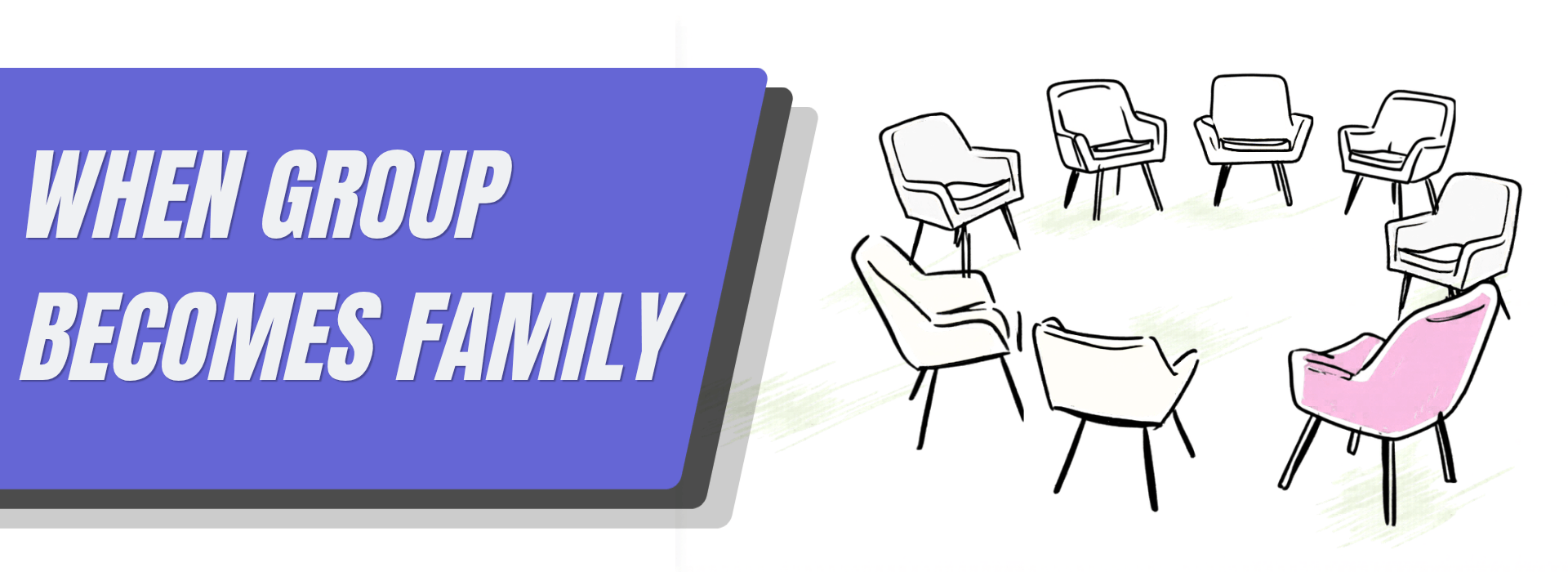
From the very first session, group members start to see each other through the lens of their old family roles. They react to these patterns just like they did at home. For example, one group member might put up with a snarky member for months because that’s how they learned to deal with their disparaging mother.
These associations are important relational data that affect our group members both inside and outside the group. Part of our job is to bring these patterns to light so that our clients’ past relationships do not shape their current ones. So part of our work is to help group members name these transference patterns and help them become more conscious of them.
Here’s a question you can ask the group at any time:
- "Does anyone in the room remind you of someone from your family?"
A question like this can give you a lot of insight, but it’s important to make sure the group has a good foundation in emotional communication first.
Keep reading and I’ll explain what I mean.
Progressive Emotional Communication

Many clients find it hard to talk about their feelings, especially when it comes to sharing feelings about others. Sometimes they do not feel they have the right to speak up, or maybe they were discouraged from doing so as children.
More generally, sharing your emotional reactions with others is considered even more unreasonable, and the thought of sharing negative feelings towards someone else is considered even more distasteful, or even dangerous. More generally, we get the message that other people's comfort matters more than our emotional honesty.
As group therapists, we help people learn how to recognize and express their feelings. We also help them figure out what might be getting in the way of emotional connection.
This is what progressive emotional communication is all about, and it could fill many newsletters. For now, I see it as helping people tell the difference between thoughts and feelings, and between feelings about themselves and feelings about others.
Group therapy is the perfect format for generating feelings and then practicing sharing self-oriented and other-oriented feelings.
- Feelings: “I feel disappointed.”
- Thoughts Disguised As Feelings: “I feel that the writing was on the wall.”
- Self-Oriented Feelings: “I felt scared when you yelled.”
- Object-Oriented Feelings: “I felt scared when you yelled, and feel angry towards you for yelling.”
More On Group Therapy:
- Some more on the core group therapy techniques I use.
- My video series on How To Run A Process Group.
Moving It Forward
When a group member recognizes someone who feels like family and gets better at naming and sharing their feelings, they can try out new ways of interacting with that person in the group.
The group dynamic is flexible enough to elicit a range of transference reactions toward various family members.
Layer One: Thoughts
It starts with an intellectual understanding that the past is present in the group at the moment.
- “I realize that I’m not as warm and friendly to Barbie, as she reminds me of my mother.”
Layer Two: Feelings - Self.
Maybe that group member feels they have been distant from Barbie, and you can help them put those feelings into words.
- “Barbie, I feel sad and guilty that I’ve been cold towards you.”
Layer Three: Feelings - Other
It can take time to help your group practice sharing feelings toward other members in a way that is safe, thoughtful, and direct. With your support, a group member might eventually be able to say something like:
- “Barbie, I am feeling really angry towards you. I also know that you’re reminding me of my mother, and I know my reaction is not entirely about you.”
Layer Four: Practice and Healing
Ideally, you can set up your group so members can practice new ways of talking to family members by working with each other.
- “Barbie, would you be open to helping me practice how to handle things with my mother when she says something similar?”
This family association technique actually helps two people improve how they share feelings and gain insight. In the example above, one person practiced confrontation and expressed their feelings towards Barbie. At the same time, Barbie might hear for the first time how her words affect others.
If any of this makes sense to you, here’s how to get started:
- When the moment feels right, ask your group: "Does anyone in the room remind you of someone from your family, even a little?" Then wait and see if anyone responds.
- If you think your group might not respond well to that question, you can still observe the group and think about which dynamics might be influenced by members’ past experiences. You can make a note to explore these later.
- The next time a member talks about a conflict with a family member or someone outside the group, pause before discussing it. Ask: "Is there anyone in the room who reminds you of that person?"
- If they say yes, ask who it is and see if both people are open to practicing new ways of talking with each other.
- If there’s any resistance, you can ask: "What do you think would happen here if you said exactly what you’re thinking?" This question helps uncover what they are afraid might happen, and the other group member can reassure them that they will not react in that way.
So this week’s group therapy challenge… before your next group, ask yourself who everyone thinks they're really talking to! Let me know in the comments how it went or if you have questions about this
Until the next time,
Oliver


Responses