TLDR:
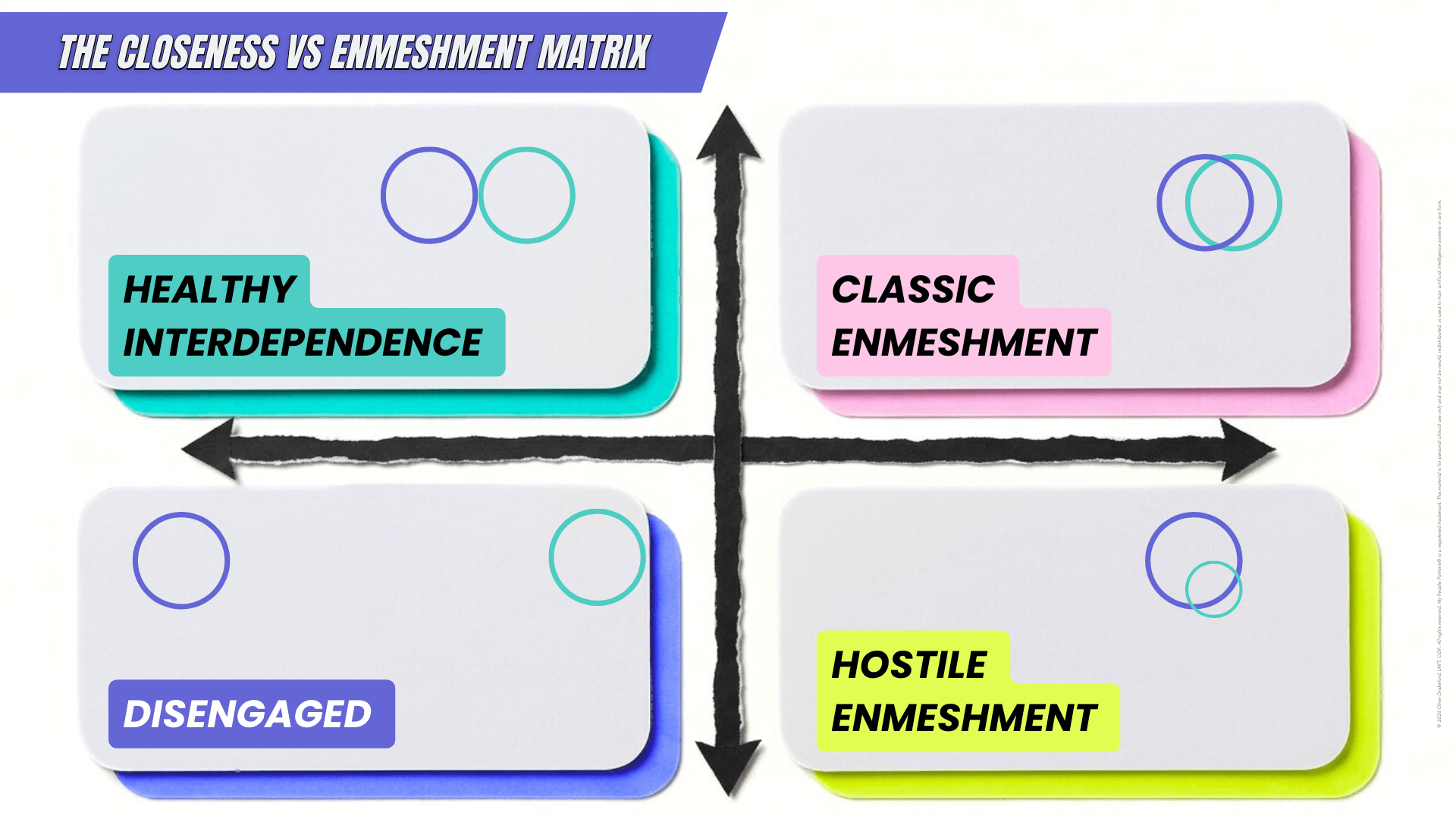
"Enmeshment" is a term that has been doing double duty for 50 years — covering both healthy closeness and genuine psychological control. This week, I'm breaking down the difference, introducing a four-quadrant model to help you tell them apart, sharing a free PDF with the full matrix, session observation guides, and the C.I.A. checklist. and, most importantly, a free family therapy consultation call!
This Week's H.I.T Home & Take Home Free PDF For Subscribers:
- The full Closeness vs Enmeshment Matrix with clinical notes for each quadrant.
- A session observation guide showing what each quadrant looks and sounds like in the room,
- A 'Signs of Intrusiveness' and 'Signs of Healthy Closeness' checklist, and
- 'The C.I.A. Check' — a three-question tool to run when you suspect enmeshment before reaching for that label.
- Freebie Give-Away - I'm giving a way a family theray consultation call.
The big mistake clinicians are making.
We hear the term "enmeshment" all the time in clinical training, and it often carries an association with pathology. So we tend to link it with unhealthy relationships, yet we also hear the same term being used to describe simple closeness between two people.
So when exactly is enmeshment unhealthy, and when is it just another word for being close?
Research shows that therapists, on average, think that much less family closeness is "normal" than most people believe, and even less than studies show is typical in real families. Basicaly we have been trained, in subtle ways, to see too much warmth as suspicious. (I'm totally guilty of this btw).
Minuchin really didn't help with this, and actually used the word "enmeshment" in two different ways in the same book. First, he described it as a harmful lack of boundaries, where families are so blended they can't adapt. Then, right after, he used it to describe normal mother-infant closeness, saying that mother-child subsystems "are often enmeshed while children are small." Also, that book is really long.
So, the same word was used for both healthy caregiving and psychological problems, even on the same page. Now, years later, our field is still dealing with this confusion, and, you'll be pleased to know, we're solving the debating in this newsletter.
Sort of.
What we really need to separate are two things: intrusiveness, which means controlling, anxious, boundary-crossing behaviors that cause harm, and closeness in caregiving, which is the nurturance and connection families need, because then we get to see what's unhelpful and unhealthy.
Win A Free Family Systems Consultation Call
- I'm so excited about this new-look newsletter and all the good stuff I'm working on that I've decided to celebrate by giving away a free family therapy consultation call. To get the chance to win, you just have to be subscribed to my youtube chanel and leave a comment on the video below that says "I love family systems therapy!". I'll pick the winners at random at the end of April 2026.
|