When families come to therapy worried about their teen’s phone use, I didn’t always turn to structural systems theory right away. Parents would often tell me their teen is “addicted"; the teen would rolls their eyes, and if I could get them to use TikTok a little less, I'd count that as a success.
I wasn't necessarily wrong by doing any of that, but I hadn’t really considered using Structural Family Systems theory to look at social media before.
Looking at social media use through a family systems lens means we see more than just behavior. We notice boundaries, hierarchy, and triangulation happening in the room but also in the digital world. If you’re not paying attention to these digital dynamics in your sessions, you’re missing a big part of the story.
This week, we’ll look at how to map out and work with family structure when things get complicated online.
-
- Digital Boundaries
- Digital Hierarchy
- Digital Triangles

There's SO MUCH good stuff in this email, or perhaps I just have a lot to say about it- so download the handout that goes along with this email - link is at the bottom.
TLDR:
When families fight about phones, the phone is rarely the real issue. This week, I'm breaking down how structural family systems theory applies directly to social media — and what enmeshed and disengaged boundaries actually look like in a teen's Instagram feed. Free PDF included.
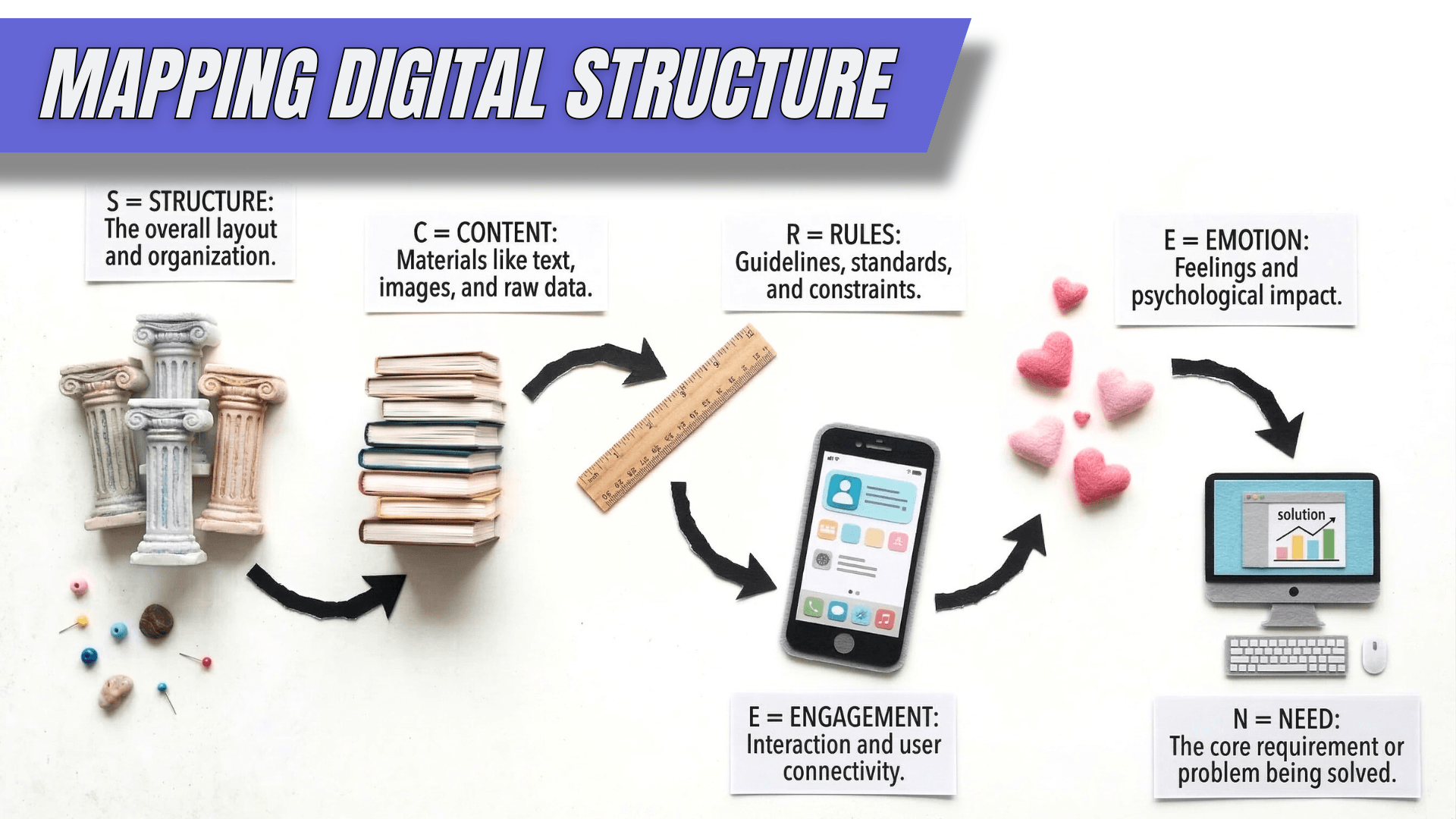
Same App, Different Planet
Before we get structural it's worth thinking developmentally: each family member will use social media differently:
- Teens are busy figuring out who they are. Social media gives them a place to try out new identities, shape how others see them, and connect with peers who reflect their growing sense of self.
- Parents, on the other hand, usually use these platforms to keep up with friends and family and to share a sense of self that’s already pretty well formed. When a mom follows her teen on Instagram and leaves comments, she’s honestly trying to stay connected. What she may not realize is that she could be stepping into her child’s online space for identity development.
This is important to keep in mind because it changes how we see social media use in family therapy. That's a long way of saying that when a family is fighting about social media, asking what each person actually uses it for can open up the conversation and give you a chance to offer some psychoeducation.
Digital Boundaries
As systemic therapists, we know healthy families need clear boundaries. But what happens when those boundaries shift from in person to online?
Digital boundaries are simply the rules and limits for how family members interact with each other’s digital lives.
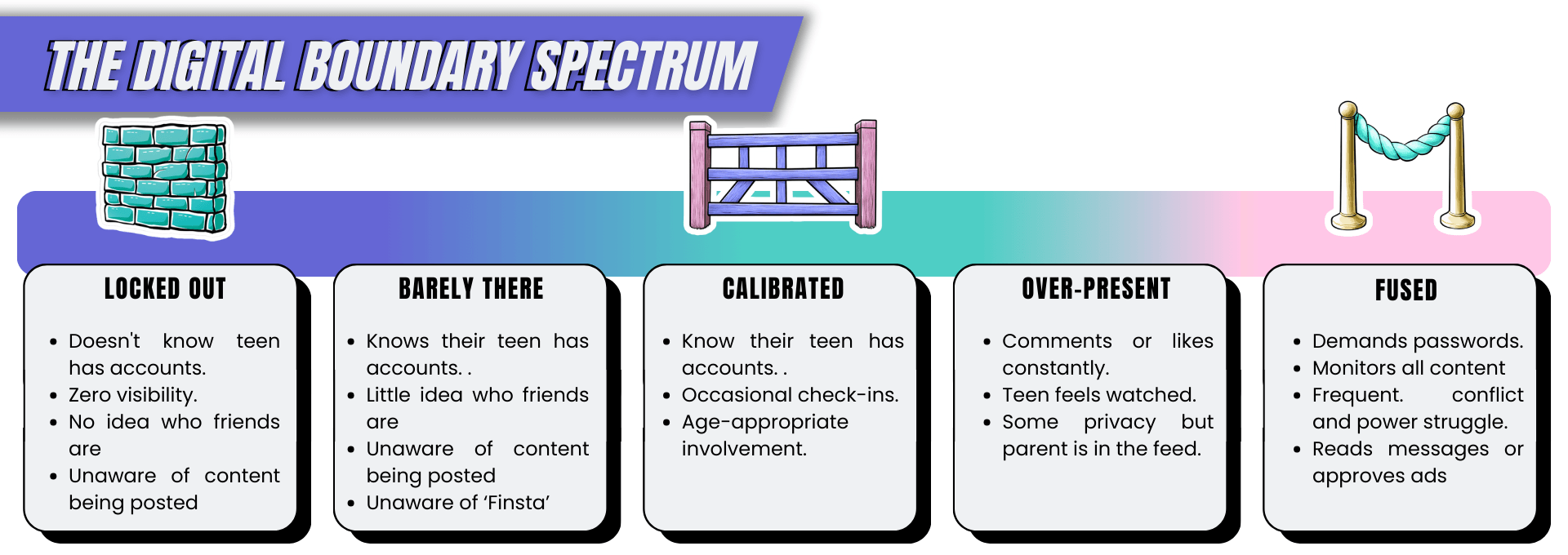
I see boundaries operating on a spectrum, and I’ll assume you don’t need the recap on the different types, but watch what happens when you map them onto online behaviors.
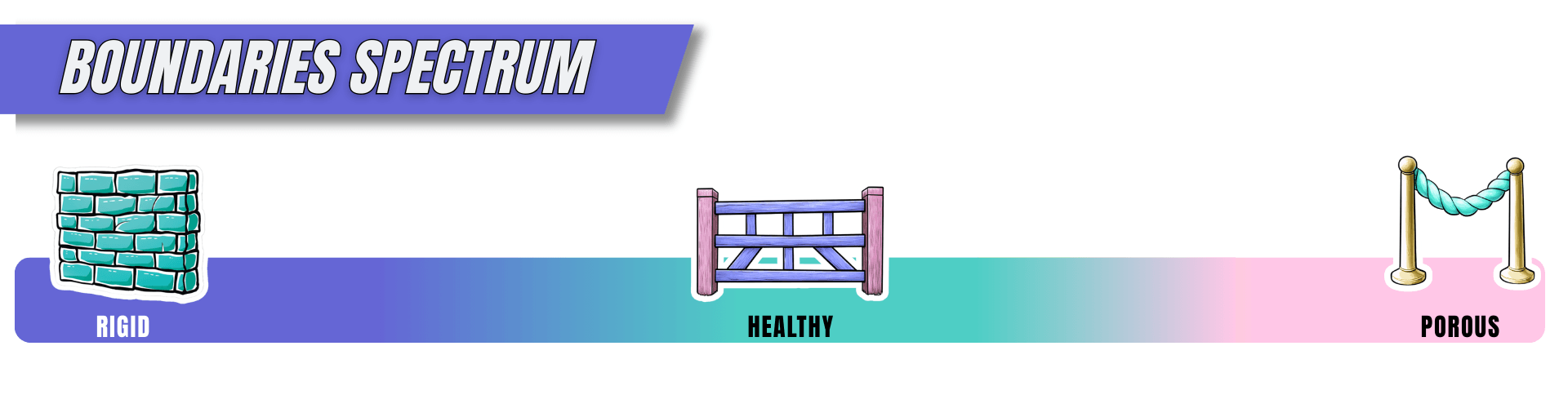
Disengaged Digital Boundaries:
In session, this might look like parents who have no idea what their teen does online. They may not even know which platforms their child uses. Sometimes, you only find out when someone else, like a school counselor, calls about a worrying post. The parent doesn’t respond to their teen’s emotional posts, which shows some disengagement.
Your job is to help these parents get more involved by guiding them through some steps: first, ask them to talk to their teen about which platforms they use; have them request to see their teen’s online profile; and finally, help them have a conversation about what’s being shared online. I often use an enactment here, having the parents ask their teen to show their profile right there in the session.
Enmeshed Digital Boundaries:
Enmeshed digital boundaries in a session might look like a parent monitoring social media too much, reading all their childs messages or accessing their phone at will. Or it could be that a parent's social media use or post is impacting their child.
To help with enmeshed digital boundaries, work with parents to find a balance between being involved and giving space. Talk together about what healthy monitoring looks like. Set clear agreements about how and when parents will check online activity. I’ve worked with families where teens were buying drugs or talking to dangerous people, and in those cases, there’s no room for negotiation—it’s a firm boundary.
Other times, you can negotiate more about privacy, making sure parents stay informed without crossing the line.
The Privacy Paradox:
Teens use social networks to build their identity, and this process needs some real privacy. Talking with friends from all over gives them room to try things out and connect. But these platforms only make it seem private. Teens might feel safe online, but their information is often visible to more people than they think—peers, strangers, and sometimes even parents—so true privacy is hard to get.
When parents intrude without permission, it disrupts the adolescent's necessary developmental process of identity formation. Healthy boundaries mean parents might have access to passwords, but they don't covertly monitor. They ask their teens to show them who they’re talking to if they’re concerned, but the flow of information is mutual.
Digital Power and Hierarchy
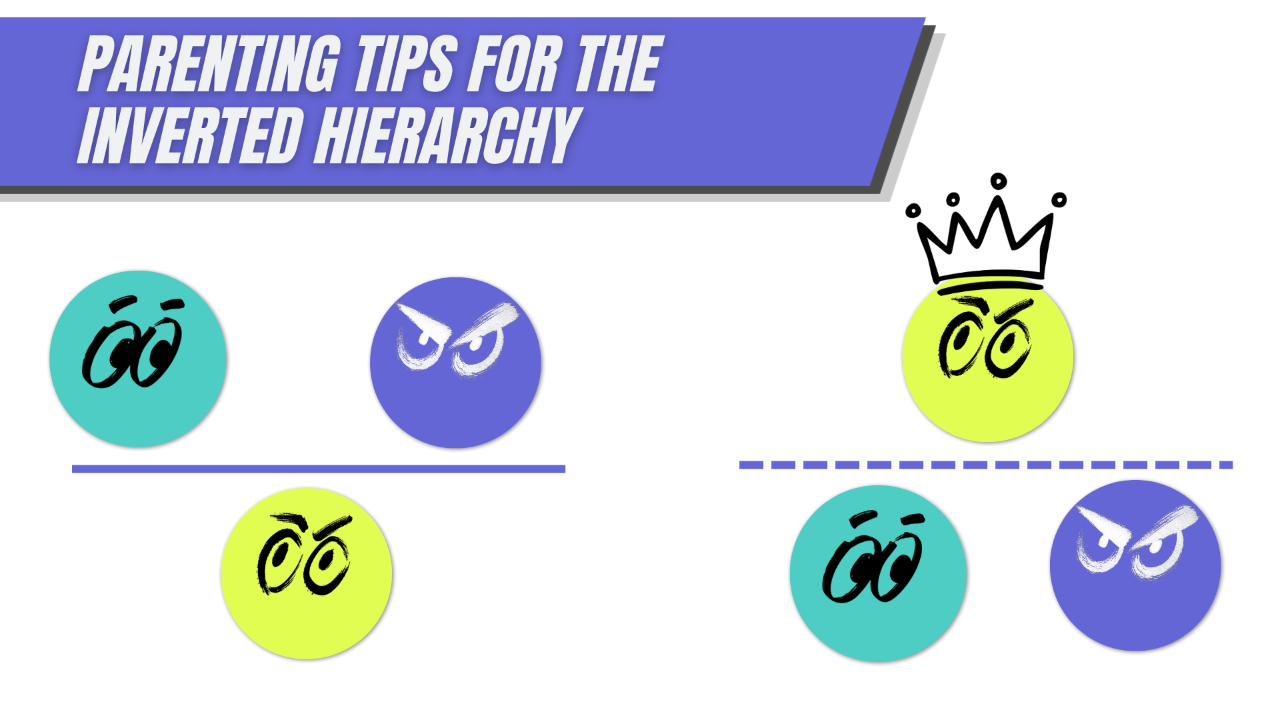
Structural Family Systems operates from the foundational principle that parents should be in charge and have more influence than their child. A healthy family hierarchy means parents are the leaders, but in an online world, technology often flips this upside down.
The Reversed Digital Hierarchy:
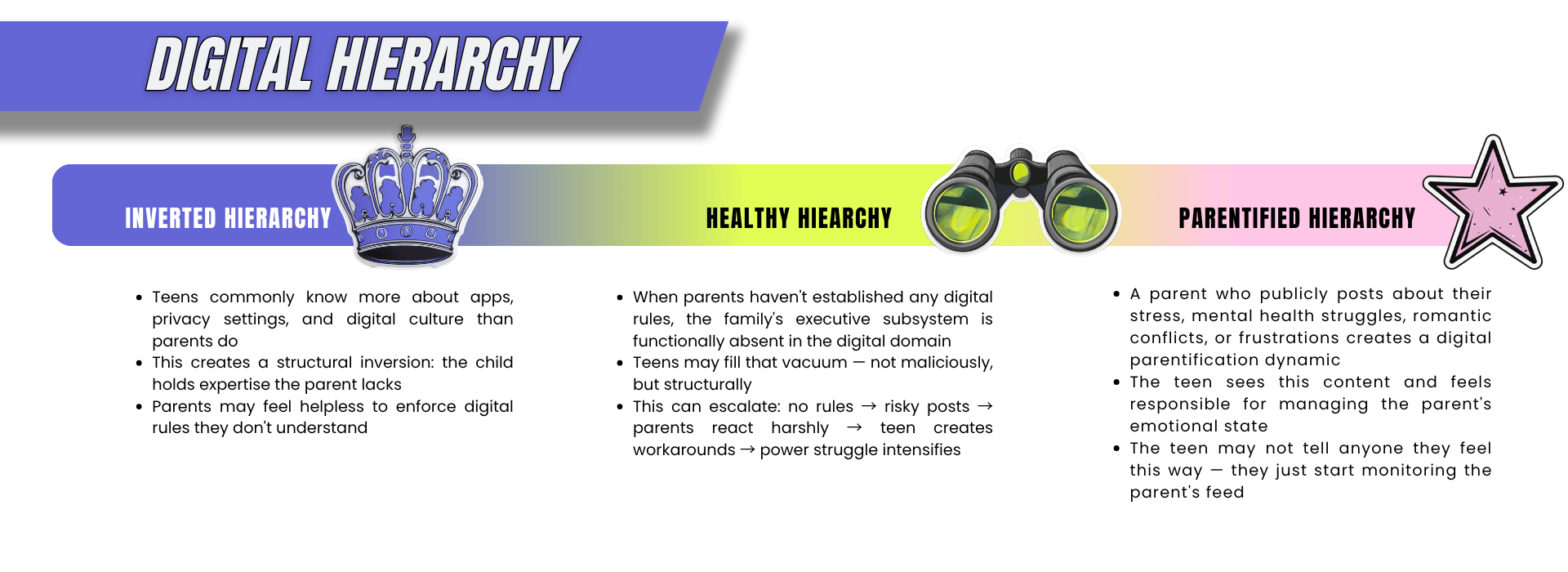
Since teens usually know more about technology than their parents, the usual family hierarchy can flip. If parents don’t understand or set rules for social networks, teens end up with the power. They decide what information gets shared, and they can keep secrets (another sign of boundaries being too rigid).
The Parentified Teen Online:
Things get even more complicated when parents use their own profiles to talk about personal stress or marital problems. If a parent posts about how tough life is, their teen might see it and feel like they have to take care of the adult emotionally.
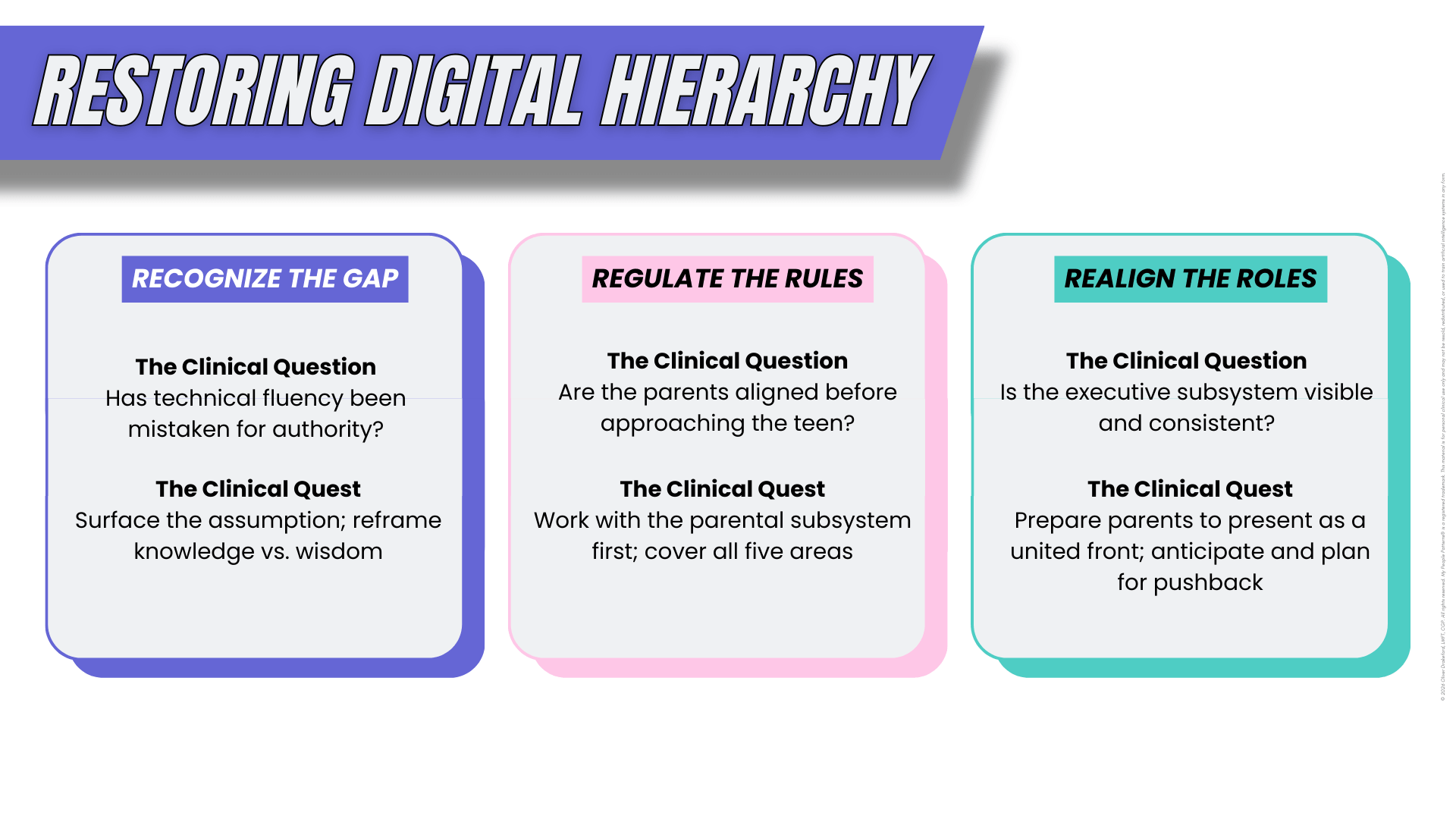 Restoring Executive Power:
In session, therapists can use an unbalancing technique to support the parents. The therapist helps parents to:
(1) Discuss and agree on specific rules (such as who can access passwords and what content is permitted);
(2) Clearly outline consequences for breaking these rules; and
(3) Present these guidelines to their teen. The goal isn’t to punish, but to restore the executive system and let the teen focus on growing up.
Digital Triangles
We all know what triangulation looks like in session: two family members bring in a third to ease tension between them. But in the digital age, triangulation has changed.
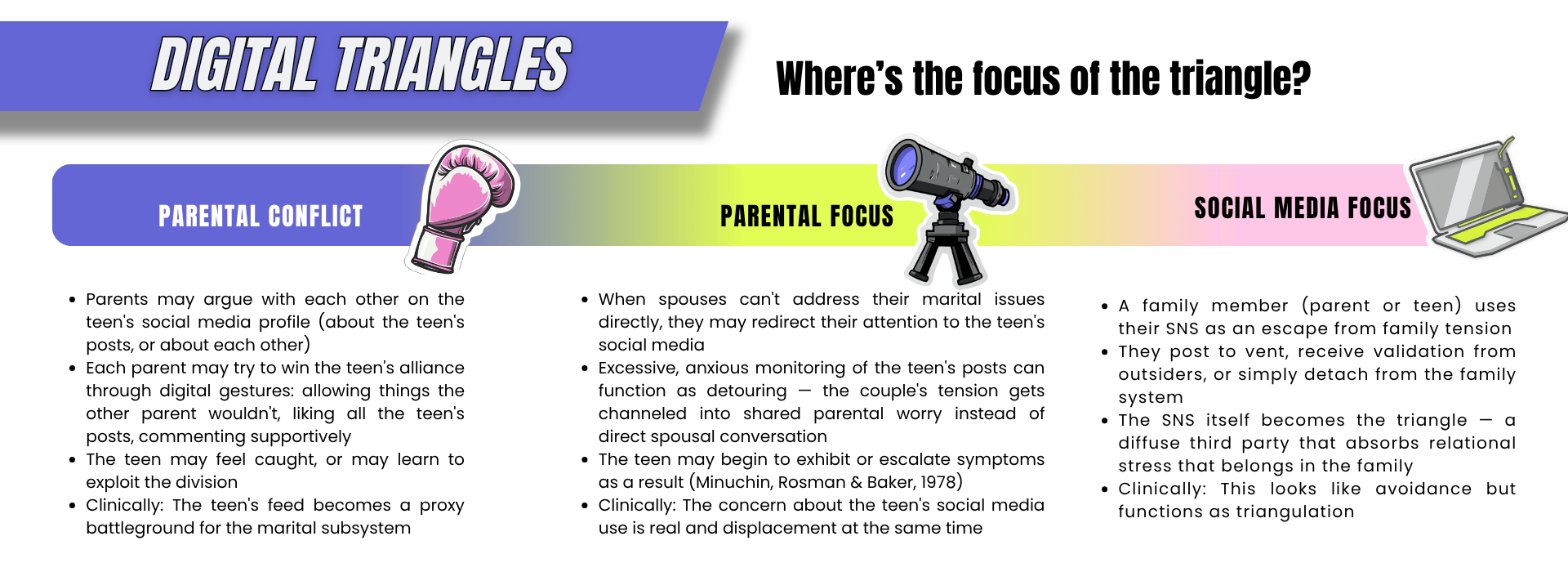
Rather than a person being the focus of the triangle, we can broaden our scope and wonder if social media is the focus - or if it's a parent, or perhaps even parental conflict.
Social Media as a Third Party:
Triangulation isn’t just about three people anymore. Sometimes, a family member uses social media to vent or avoid family conflict, bringing the platform into the family dynamic.
The phone (or phone usage) can act as a buffer that keeps a couple from facing their own issues.
Parental Conflict As A Third Pary:
Spouses who are in conflict might use their own profiles to argue, post negative comments about each other, or try to get their teen to take sides online. This puts the teen right in the middle of the parents’ dispute.
De-triangling Interventions:
When you see digital triangulation, address it directly in the session. Encourage families to set a rule that all online communication stays positive and does not mention family conflict. If parents focus on the teen’s online behavior instead of their own issues, guide the conversation back and suggest meeting with the parents separately to work on their relationship.