
Every family faces stress at some point, but the way they handle it is often part of the reason they come to see a family therapist.
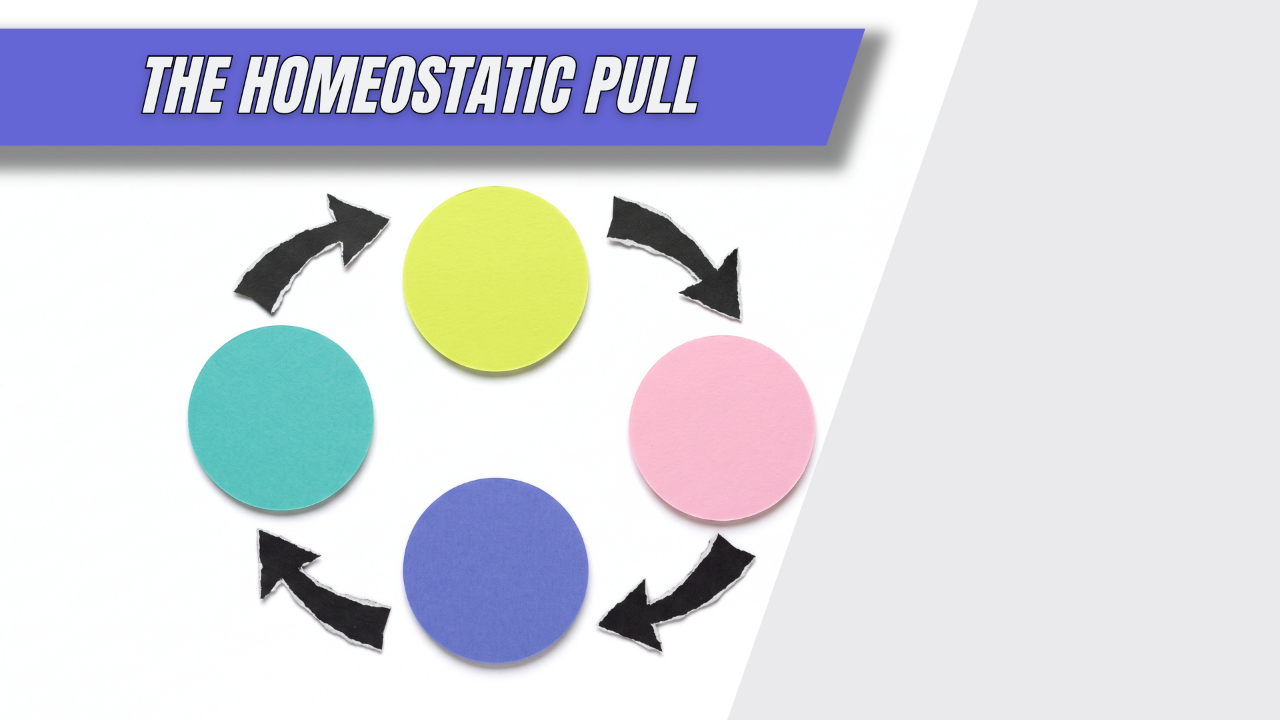
Stress doesn’t mean something is wrong. It happens whenever a family goes through change. For example, a child starts school, a parent loses a job, a teenager becomes more independent, or a grandparent moves in. Bowen Family Theory calls these ‘Nodal Events’—natural life milestones that bring stress. Systemic therapists see family symptoms as a result of how families handle stress.
Minuchin taught that how we respond to stress matters more than the stressful event itself. Two families can face the same problem, but one adapts while the other gets stuck. This is what we focus on in therapy.
Understanding where stress comes from is important. In my experience, most assessments look at just one area, but families often face stress from several sources at once. In this post, we’ll explore where stress comes from and how to see how a family is handling it.
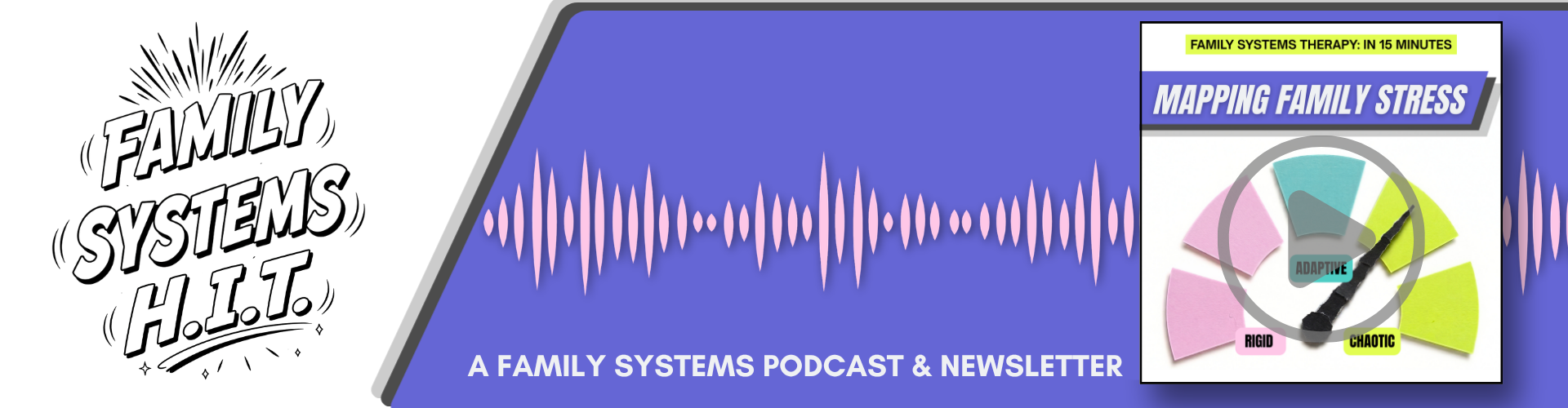
You can now listen to this as a podcast on Spotify or here.
The Big News:
- Too many words? You can now listen to this as a podcast.

- Check out my step-by-step approach to family systems therapy
- Free Family Therapy Worksheets PDF for your next intake.
The Four Sources Of Stress
Personal: Sometimes, one family member is stressed by something outside the family, like work, a health scare, or a financial setback. That anxiety spreads to others. It can affect how they talk to their partner at dinner, how they handle bedtime with their kids, and the overall mood at home. These daily interactions let stress move through the family, so one person’s stress can end up affecting everyone.
Environmental: Here, the whole family is under pressure. This could be due to unemployment, housing problems, or dealing with several agencies at once. This stress doesn’t start with one person and spread; it affects everyone at the same time. Families in this situation are not just facing a problem—they are already overwhelmed and have less capacity to handle more.
Developmental: Families move through predictable stages, like becoming a couple, having a first child, raising school-age kids, dealing with adolescence, becoming empty nesters, and retiring. Each stage brings stress, not because something is wrong, but because the family needs to adjust. Old rules and roles might not fit anymore, so families have to figure out new ways to work together. This is normal.
Idiosyncratic: This means the stress is unique to one family and doesn’t follow a typical pattern. For example, a child with a disability starts spending more time outside the family, or a parent becomes seriously ill and roles shift. When the parent recovers, the family has to adjust again. These situations can overwhelm a family that was doing fine before.
A good assessment looks at all four sources of stress. It considers what’s happening inside the family and also outside pressures.
The Rigidity Test
Stress is not always the main reason families seek help, even if they seem overwhelmed. It can be tempting to focus only on stress, and sometimes that is the right thing to do.
Stress is a normal part of life for families, couples, and individuals. Since everyone experiences it, stress alone can’t be the cause of dysfunction. There must be another factor, and Salvador Minuchin was one of the first to say that the real issue is rigidity.
Engineers design suspension bridges to be somewhat flexible. If a bridge is too rigid, it can develop stress fractures and fail where it is most reinforced. But if a bridge moves too much and lacks structure, it can fall apart. The Tacoma Narrows Bridge collapsed in 1940 because it couldn’t absorb and spread out wind force. In engineering, the ideal balance is called 'damping,' which means controlled, purposeful flexibility, though that might not be the best word to use in a family session.
Rigid Families
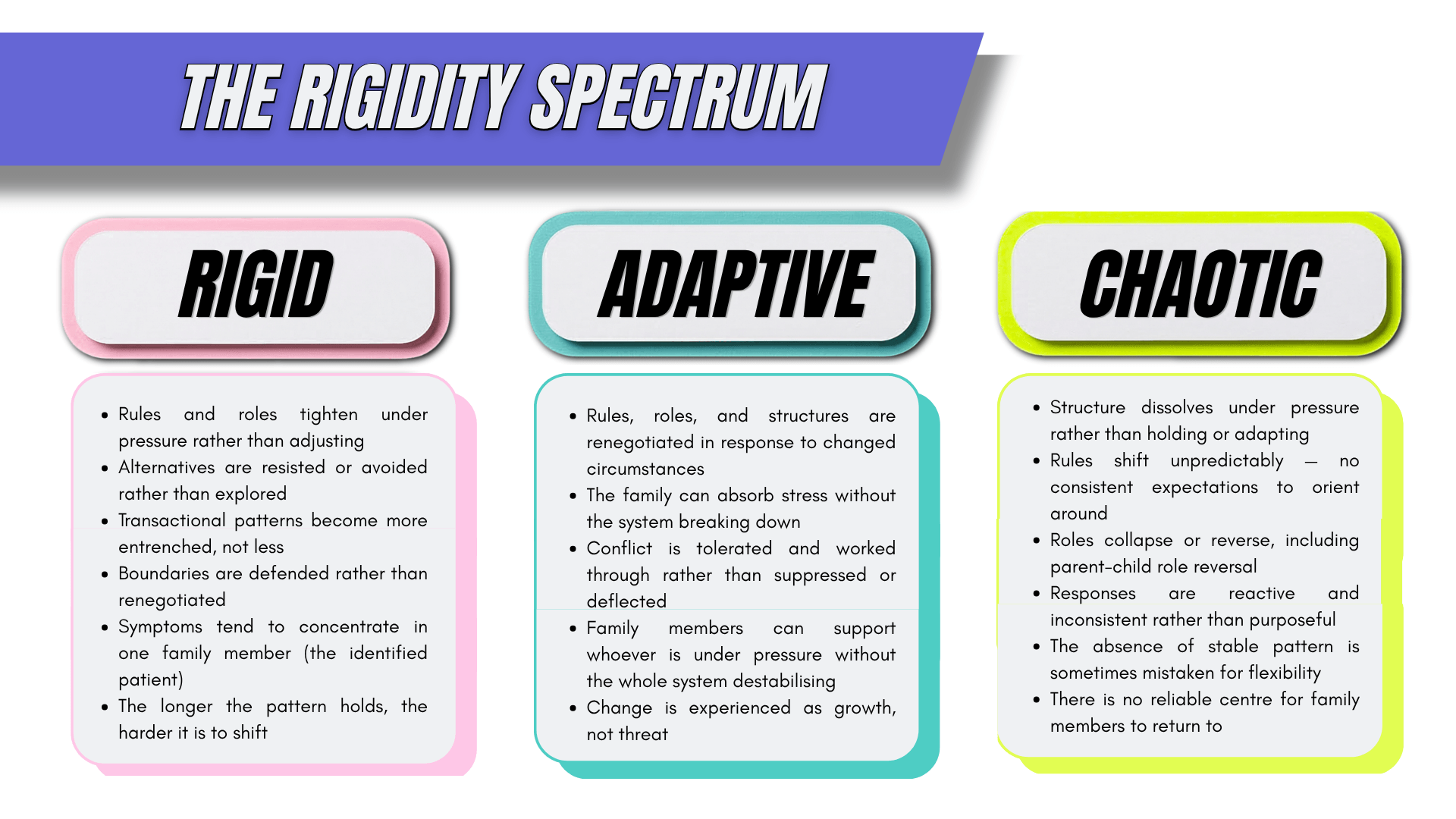
Families who develop symptoms are often the ones that become more rigid when faced with challenges. Rigid families respond to pressure by tightening up. Rules get stricter, roles become more fixed, and patterns are harder to change. Inside the family, this can feel like stability or holding things together. But from the outside, and from a systemic view, these families can’t adapt to change with any flexibility.
It’s important to remember that rigidity gets worse over time. Patterns that get stuck under stress are harder to change the longer they last. A family that asks for help soon after a problem starts is in a much better place than one that has been stuck for years. In the second case, the patterns are not just habits—they have become part of the family’s identity. Early intervention is not just efficient; it is much more effective.
Chaotic Families
Chaotic families respond in the opposite way. Their structure gets loose under pressure instead of holding firm. In these families, rules change unpredictably, roles fall apart or switch, and there’s no steady pattern for anyone to rely on.
This might look like flexibility because things are always changing, but it’s not the healthy kind. It’s just reacting without any clear direction.
Adaptive Or Functional Families
Functional families are flexible, but not chaotic. They renegotiate when needed. Rules are updated, roles shift, and the family structure changes to fit new situations. The family stays familiar but also adapts. This kind of flexibility is what healthy families show under pressure.
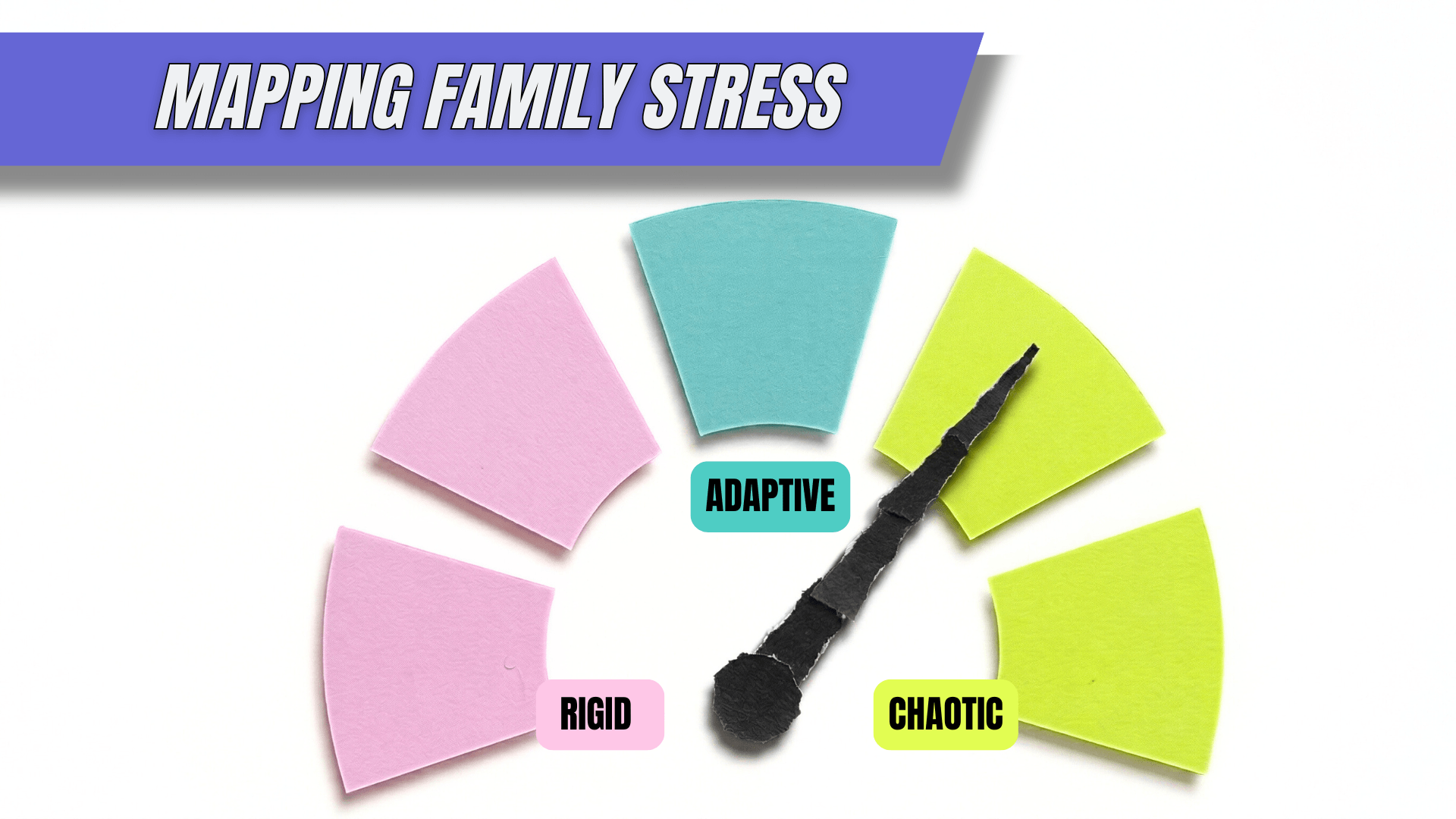
The ideal is adaptive flexibility. Families in this spot can feel pressure, absorb it, and reorganize without losing their core structure. They renegotiate and update as needed. They can handle uncertainty without becoming rigid or falling apart. Even a rough idea of where a family falls on this scale, noted after a session, gives you a quick clinical sense before planning any intervention.
How To Ask About A Family's Stress.
You don't need a formal assessment protocol to use this tool.
Four questions, asked of yourself after any session, are enough to get a working placement.
- What happened to the family's rules and roles when stress hit?
- Did they become stricter, loosen, or change in a healthy way?
- When new options were discussed, did the family explore them openly, or did they resist, shut down, or go back to old patterns?
- How long has the current way of responding been happening?
- Has it been weeks, months, or years?
- Does the family have language for what's happening, or does the stress appear only in behavior and symptoms?
The answers will usually point you clearly toward one of three zones.
At the rigid end, patterns get stronger under pressure, alternatives feel threatening, and structure is defended instead of questioned. These families often seem highly functional on the surface—organized, consistent, and clear about the rules. The rigidity only shows up when something challenges it, and symptoms appear in one person.
At the adaptive center, there is discomfort, but the family can adjust. Rules are updated, roles are flexible, and new responses are tried. There’s still stress—sometimes a lot—but the family has enough flexibility to reorganize without falling apart.
At the chaotic end, structure falls apart under pressure, responses are reactive and inconsistent, and there’s no stable pattern to work with. These families can be harder to place at first because the lack of a fixed pattern can look like flexibility.
Until next time,
Oliver & My People Patterns
And also... let me know if the audio / podcast thing works for you!


Responses