
In a first family session, you need to collect a lot of data—and some comes before you ask your first question.
TLDR: This week, I'm breaking down the six structural concepts that let you read any family's architecture from the first session — subsystems, boundaries, hierarchy, triangulation, and alliances. I explain the OPEN framework: a four-step model for moving from the presenting complaint to something the family can actually do differently. Free PDF cheat sheet included at the end.

A lot of the observational data a structural family therapist gathers from the family comes from observing how they reveal their family’s structure.
- Who sits where?
- Who speaks for whom?
- Who looks at someone else before answering?
- Who gets interrupted,
- And who does the interrupting?
Structural family therapy is based on the idea that the symptom is rarely the real problem. Instead, it is a signal that comes from the way the family is organized, often without their awareness. If you learn to read the structure, the symptom becomes clearer.
In this post, I’ll walk you through some of the structural concepts that are important for me to understand in every family and couples case I work with. Along the way, I’ll include real-world examples and sample therapist statements to show how these ideas play out in practice. Then I want to introduce a framework I’m calling the OPEN model for moving from assessment to action within a session.
The Structural Family Systems Concepts
Structural family therapy gives you a specific vocabulary for what you're looking at. These are six of the main concepts that support it.
Subsystems Are Departments
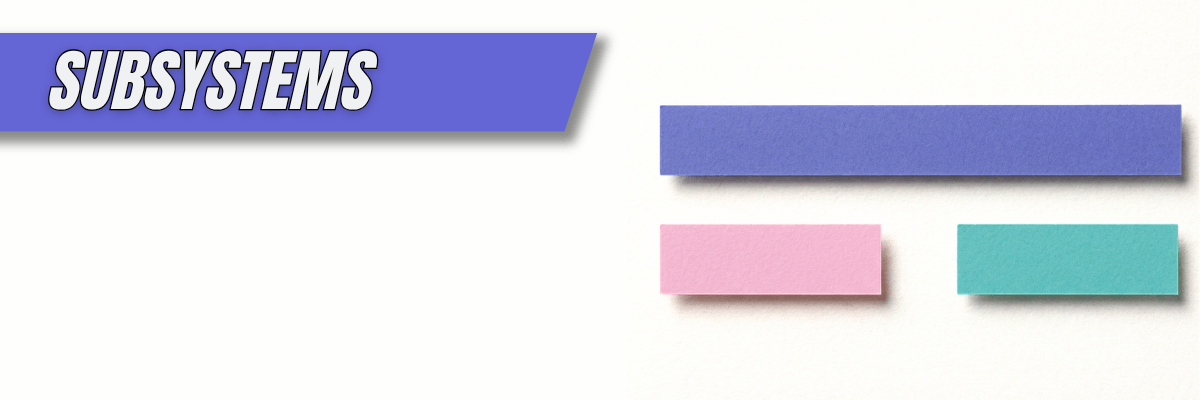
Every family is made up of smaller working units, each having its own function. There are a couple of subsystems, a partnership that exists separately from the parenting role. There is a parenting subsystem — the executive team responsible for running the household. There is a sibling subsystem, the peer world children inhabit, which has its own rules, hierarchy, and logic.
You can think of these subsystems like departments in a business. Each has its own job and its own members. In a healthy family, these departments stay mostly separate: the couple subsystem stays distinct from the parenting one, the sibling group isn’t taken over by adult issues, and the parenting group doesn’t change based on who is most emotionally available.
When the departments blur, things stop working. For example, we don’t want teens or tweens dictating where the family goes on vacation, although we might love to consider their opinions. Similarly, we don’t really want a parent turning to their child for emotional comfort when they’re upset.
Hierarchy Is The Org Chart

If subsystems are departments, the hierarchy tells you who runs them.
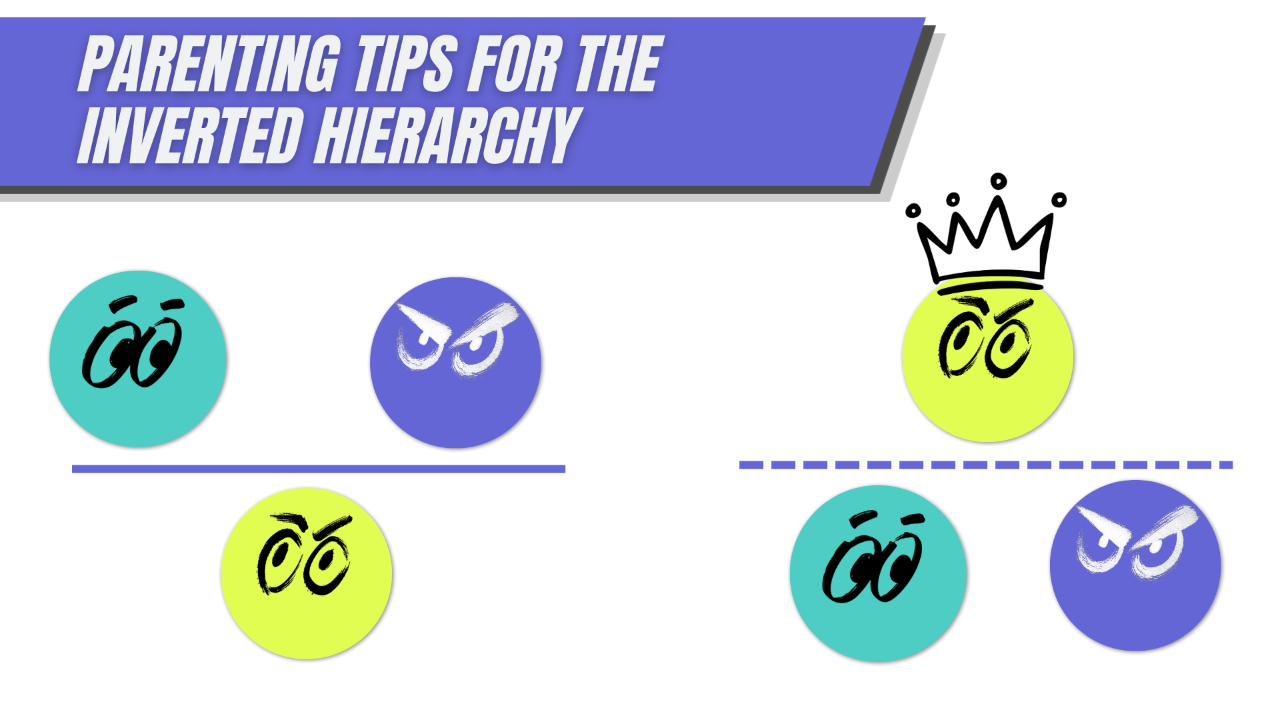
Every family has a hierarchy. It might work well, be unclear, or even be reversed, but it is always there. In structural family therapy, the basic idea is that parents should be in charge. This isn’t because therapists know what’s best for every family, but because research shows that families function better when adults lead, and children do not.
I often use a business analogy to explain this to clinicians. Imagine a company where no one knows who the CEO is, junior staff make executive decisions, and managers check with interns before acting. There is no clear chain of command. That company won’t work well, because no one is in charge of delegating tasks or driving the vision and goals. Families work the same way; we’re not selling products or raising money as a company does, but the goal of a family with kids is to raise happy, healthy, successful young adults. When the hierarchy is unclear, the whole system struggles to adjust.
In practice, this might look like a child acting as a third adult, a teenager managing a parent’s emotions, or a parent letting their child make decisions that should be the parent’s responsibility. These are not bad parents; often, it comes from a fear of being ‘too tough’ or just not knowing what consequences are appropriate. They are parents whose hierarchy has shifted, often slowly and for understandable reasons. Usually, the family’s symptoms are the first sign that something in the structure has changed.
One thing that often surprises clinicians is that hierarchy is not entirely about control or warmth. A family can be very warm and still have a clear hierarchy. Another family might be very controlling but lack a real hierarchy. These are separate issues. If you mix them up—like seeing a firm parent as cold or a permissive parent as connected—you miss the real structure.
You can start noticing hierarchy even before the family sits down. Who called to make the appointment? Who came in with a prepared story about the problem? Who spoke over someone else in the waiting room? Who did the child look at before answering your first question? All of this is information about hierarchy, and it is easy to gather.
These early observations are not just information to file away—they are clues that help you fine-tune your approach in the first session. For example, let your initial questions and engagement be guided by what you notice: if one parent dominates, you can make an effort to invite the quieter members in; if a child seeks reassurance from a parent before answering, you might explore how decisions are made in the family. Including these observations in your process lets you begin working with the family's real structure from the very first moments.
Boundaries Are The Job Descriptions

If subsystems are the departments, boundaries are what define who belongs where, and what follows from that membership.
Minuchin described boundaries as the rules that determine who participates and how. A clear boundary means family members know which role they are in and what is expected of them in that role. A parent who can be a parent and a couple who can be a couple without the two intruding into each other — that is a boundary doing its job.
Boundaries can be more or less rigid. At one extreme, they are so firm that people cannot connect—Minuchin called this disengagement. Family members live together but do not really connect emotionally. No one steps in, no one connects, and everyone learns to handle things on their own. At the other extreme, boundaries disappear completely—this is enmeshment—and no one gets to have their own identity. Everyone is too involved in each other’s lives to have space for themselves.
Neither extreme is healthy, and more importantly, neither is really about love or its lack. Both are anxious responses to the fear of connection. Enmeshment says, 'I’m afraid of losing you, so I’ll make the boundary disappear.' Disengagement says, 'Connection has hurt me, so I’ll make the wall thicker.' These are different fears, but both lead to loneliness.
Triangles Are The Pressure Valve

When two people are in conflict and cannot handle the tension, they will involve a third person. This is not done on purpose; it is simply how systems work when they cannot manage the pressure. The tension needs an outlet.
In families, there is almost always a child.
The triangle acts like a pressure valve. When the couple is under stress, a child’s behavior frequently escalates. The child’s symptoms shift the couple’s focus—toward the child, toward worry, or toward arguments about how to respond. For a while, the couple stops fighting with each other. The problem is that the valve is actually a person.
What looks like a child who is dysregulated, defiant, anxious, or shut down is very often a child performing a function the system assigned without ever asking them. Your clinical job is to name the triangle — the process, the shape of it — without putting it on any one person. The family didn't do this on purpose. The system did.
Enmeshement and Disengagement:

A family that is very close and always involved in each other’s lives can seem warm. Sometimes it is. But enmeshment is not just intense warmth. Enmeshment is closeness driven by anxiety. For example, a parent who cannot let their teenager be uncomfortable without stepping in, a mother who senses her adult child’s emotions before the child does, or a child who constantly monitors a parent’s mood. This is not love at work; it is fear disguised as love.
Disengagement is often misunderstood in the opposite way. A father who seems distant, hands-off, or unconcerned might appear strong or self-sufficient, especially in cultures that value those traits. In my experience, though, this is usually a way to manage the anxiety that comes with getting close to people who might disappoint, leave, or involve you in their pain.
Both patterns lead to loneliness, even though they look different. When you see this, it helps us stop treating them as character flaws and start addressing them as anxious coping strategies.
Alliances
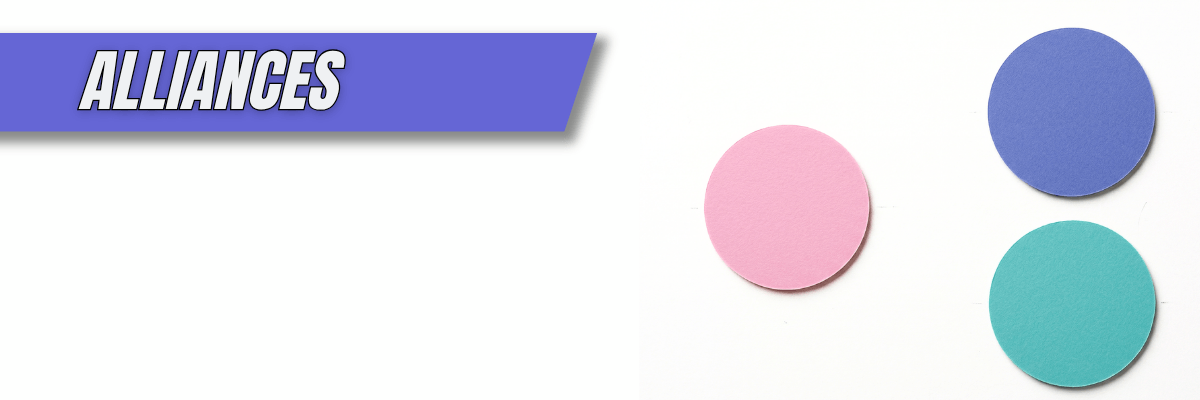
Every family has alliances. Every family has coalitions. Someone sides with someone else. Someone is recruited. Someone gets left out of a conversation they probably should have been part of.
The important question is not whether alliances exist—they always do. The real issue is whether these alliances cross generational lines and weaken the hierarchy. For example, a parent and child might team up against the other parent, a grandparent might undermine a caregiver’s authority to stay close to a grandchild, or a teenager might be asked to support a parent emotionally.
When you see this in a session, your first instinct might be to point out who is doing what. But this often backfires. People become defensive when they feel blamed. They are less defensive when you describe the pattern instead.
Describe the triangle and the shape of the alliance. Help the family see the dynamic from an outside perspective. This creates change—not by blaming anyone, but by making what was hidden visible.
Quick Question: You probably know all of those terms and concepts, but what's the 'thing' in family systems you don't get? Let me know in the comments and I'll try answer you in a future newsletter or youtube video.
The O.P.E.N Framework
Noticing these patterns is just the beginning. To address them in therapy, a concrete approach is needed. This is where the OPEN framework comes in—a practical model to guide sessions from understanding to change.

O - Open Up The Complaint
A family often comes to a first session with a story that has already been edited, compressed, and organized around one person. Somebody is the problem; we call them the ‘Identified Patient’, the person everybody agrees is the issue. Our job is not to challenge that story head-on, at least at first, but it is important in the first session to expand it.
A question I get asked constantly is: ‘Who should I talk to first?’ I generally start by asking the Identified Patient to describe the problem in their own words, and definitely do this if a parent appears very anxious to go first. The over-functioner who booked the appointment and arrived with the most detailed account of the problem is usually the last person who needs more airtime. I often start with the identified patient—giving them space to be more than their label — while the rest of the family listens.
P — Patterns That Maintain It
Once the complaint is open, the question shifts: what is the family doing, right now, in its regular functioning, that keeps this problem in place?
This is not a blame question. Every problem-maintaining behavior makes complete sense from the person's perspective. The parent who overcorrects because they are terrified of what will happen if they don't. The partner who withdraws because every attempt to engage has ended in escalation. The child who shuts down because shutting down has been the only option that has worked. The patterns are the family's best available solution to the real problem — they just stopped working.
What Minuchin understood is that most families already know they are all in the mix. Before they crystallized the story into one entirely blaming it on one person, they had already quietly asked themselves what they might have done differently. There is a part of every family member ready to ally with you if you give them the opening.
Your best tool for finding it is to use an enactment, and the simplest version is just to get them talking to each other rather than reporting to you. All you have to do then is watch the pattern run in real time. The key is to track process, not content. It doesn't matter what they're talking about; you’re watching the exchanges and patterns in who speaks, who goes quiet, and what happens.
If you can see a loop or a pattern at play, you can try and name it and see if they agree: “It seems that the harder you push, the more he pulls back and goes quiet, and the more he pulls back, the harder you push. Does that sound like a common dance?”
|

E — Explore The Past
This step surprises people because the reputation of structural family therapy is that it is present-focused, and exploring the past definitely wasn't originally part of the model at all. Early structural family therapy rejected it entirely; the systems people said we work in the here and now, we leave childhood to the analysts. Minuchin himself later admitted that his position was stubbornness, not clinical wisdom.
The restricted ways people relate in the present were often survival strategies from the past. You can do behavioral coaching for years, but if you never understand why someone can't challenge their partner even when they clearly disagree, you will be pushing against a wall that was built long before this family walked into your office.
The question is not: what happened to you? It is more specific than that: where did this particular way of seeing things come from? A question Minuchin used that I keep coming back to is "How did your parents select for you this particular pair of lenses?"
We are not asking people to throw the lenses away. We are asking them to notice they are wearing them. Keep this step brief and targeted to the pattern you just uncovered in P. One focused question per adult. This is not an archaeological dig. And one more thing worth mentioning: the children stay as the audience here.
They are quiet, but present — and what they hear is their parents as people with histories, more than as authorities. For a teenager who thinks their parent is simply being unreasonable, hearing that dad learned to disappear because conflict scared him as a kid can shift something that no amount of direct work with that teenager would have touched.
N — New Ways Of Relating
Assessment without movement is just description. This is where the framework lands — in the question of what the family is willing to try differently, and who is actually available to be part of that.
The therapist's job is to offer a new frame: a way of understanding what has been happening that opens up options the family could not see from inside their original story. You are not prescribing like a doctor. You are co-authoring. With a defensive or conflict-heavy family, I often flip the question entirely — instead of asking what you want your partner to change, I ask: "What's one thing you could change that might change things?"
Either way, get the answer concrete and behavioral. "Better communication" means nothing. What does it look like on a Tuesday night when everyone is tired, and the homework isn't done? Every person leaves with one specific commitment. If you skip this step, you have done beautiful systems thinking and handed the family a well-informed diagnosis they have no stake in — and they probably won't come back.
One father I worked with volunteered that he'd stop jumping in when his wife set a consequence, even when he disagreed with it. That was his one thing. It sounds minor. But it closed a gap the child had been walking through for two years. The symptom that brought the family in hadn't changed yet — but the structure underneath it had.
If you don't think you'll be able to remember all this in a session - I've got you covered - download the PDF Cheat Sheet using the button below.
Comments and Questions: What's the 'thing' in family systems you don't get yet or want to understand better? Let me know in the comments and I'll try answer you in a future newsletter or youtube video.
I hope this one gives you a framework you can actually pick up and use — something to hold in mind the next time a family sits down in front of you and you are trying to figure out where to look first.
Till next time,
Oliver & My People Patterns


Responses