
My associate JB has been working with a teen for a while, and despite her best efforts, has not been able to get the family to agree to family therapy sessions with another therapist. She’s been doing the best she can, fielding parent consultations and the occasional session with the teen and other family members.
It’s a very complicated case, and I’m honestly very impressed with how hard she’s working. However, during our supervision session this week, I struggled to concentrate on what she was saying and found the words coming out of my mouth rather dismissive. At one point, I had this overwhelming urge to advise her to get this kid off her caseload and into residential treatment.
Now, granted, I can be crotchety without enough sleep... or coffee... or if it's too hot, so grumpiness is not entirely unfamiliar to me. Still, because I was actually quite well-rested and fueled up on Nespresso, I caught this urge in time and asked myself some questions:
- Why was I becoming irritable?
- How was JBcontributing to this?
- What does this reflect in the family?
- (and is this something I could turn into a newsletter?)
In this week’s newsletter, I want to dive into the parallel process in systems consultation groups, and some of the ways group supervision and consultation can get you unstuck.
House Keeping
- This is such a coincidence, but I'm starting a couple of family therapy consultation groups, and I'd love for you to be part of it.
- There are two slots left in the 11am PST Tuesday Group
- There are four slots left in the 9am PST Monday Group
|

- I've only got 8 slots per group, so if you'd like to see if there's still room or want to find out more, join The Family Therapy Consultation Group - it's where I run the group from.
1. Countertransference In Family Therapy Is Clinical Data.
We don’t talk a lot about transference and countertransference in family systems work, and I don’t think I’ve seen any reference to it in any of Salvador Minuchin’s work. To be fair, it’s not what he was particularly focused on, but in the decades since, other writers, particularly Harold Searles, have focused on the supervisory relationship and noted that the emotional pattern between a patient and therapist could show up again between therapist and supervisor.
He saw it mainly through a psychodynamic lens: unconscious feelings, transference, and countertransference.
In family therapy supervision, the word "isomorphism" proved especially useful. It means “same form”: the structure of a family interaction may reappear in the therapy or supervisory relationship. For example, a family avoids conflict; the therapist avoids naming the tension with the family; and the supervisor avoids challenging the therapist to explore conflict.
In my pause, I realized this was happening in supervision: Jacqlene was enthusiastically discussing a variety of ideas to help her struggling client, while I wanted to shut down the entire conversation and send the kid to boarding school. So, I named it:
“Hold on, JB, I’m noticing a dynamic between us that I think we need to explore. I’m noticing in myself that I want to end this conversation and shut you down, while you seem to be coming up with more ideas to help your client. Who are we being in the family?”
Without pausing, she got it. “Well, you’re being Mom, and I’m being Dad.”
The family dynamic was being repeated; this was a family who had one parent (me) who felt pushed out, resentful, grumpy, and just wanted to get to the solution, while the other parent wanted to continuously come up with ideas to rescue their child, from cupping to ketamine to transcranial magnetic stimulation.
2. Therapists Can Get Assigned a Role Without Realizing It
Families often arrive with a plot already written, and a series of roles for all members that are deeply ingrained into the relationship dynamics. In this family, there is a child who needs rescuing, and one parent whose attempts to rescue frequently cross into martyrdom when they fail. The other parent feels excluded, pushed out, and resentful, which shows up in sessions as heavy, matter-of-fact solutions that are often helpful but land in ways that seem to lack empathy and understanding.
My desire to ship the kid off to residential was absolutely the latter parent, and I wondered out loud with Jacqueline if she was falling into the role of the former parent.
I worked for many years in residential treatment centers for teens, and saw this phenomenon occur frequently. The most heartbreaking and disturbing form is when the team was repelled or repulsed by a client, and we’d often have to work out that this dynamic reflected one of the child’s parents feeling a need to get rid of or reject their own kid, which makes sense when that child is in a 45-day residential program.
3. More Urgency Isn't More Help
When a case feels stuck, most of us reach for something to get unstuck, perhaps a better series of questions to ask, or a new technique to reframe the problem, or a good old worksheet.
I ran a supervision group for a while for individual therapists who were all associates, and it took me a few weeks to catch that there was one therapist who would always end our sessions by asking if anyone had ‘any resources’ for a client who was struggling with substances.
I pointed this pattern out to the therapist, who was a little defensive at first until I explained the parallel process to him. We looked at how the client was putting pressure on the therapist to give him solutions, fixes, ‘resources’, and, in turn, the therapist was passing that urgency on to me, as the supervisor, and to the group to provide the answers.
Often this is a pattern of overfunctioning, and it's the hardest dynamic in this profession to catch because, from the inside, it looks exactly like doing your job well. Of course, a therapist can sometimes pass along resources, and I’ve got nothing against a PDF worksheet. Still, there’s a process and a role to consider when this happens repeatedly, and a consultation or supervision group is the perfect place to catch it.
4. A Good Consultation Group Doesn't Always Hand You an Answer
The best consultation slows you down before it speeds you up. It helps you create the map: who's aligned with whom, who's gone peripheral, who wants the change most, which roles are assigned to family members, and which, if any, you're playing into.
I could have provided resources and links and spent hours researching worksheets for this therapist, but being psychoanalytically trained, it’s just not the sort of therapist I am. Instead, I prefer to lean into the process, and when I slowed things down, this therapist was able to see things differently. We worked together to understand how his own sense of urgency to help stemmed from a sense of helplessness induced by his client. Providing solutions, worksheets, and resources had value, for sure, but the deeper work was to help this client get in touch with his own feelings of powerlessness and, potentially, to see how they were giving up their own sense of agency with each ask.
When Jacqlene and I slowed things down, we were able to see and label for how two parenting styles were working together to contribute to their child’s presenting problem.
- The Jellyfish Parent has difficulty holding boundaries and prioritizes their child’s happiness and positive feelings.
- The Snowplow Parent - wants to remove obstacles in the way of their child’s happiness; they are solution-oriented and want to fix things (and can appear grumpy or overly brusque).
The impact of these two parenting styles in this particular case is a sense of learned helplessness in their child, who wasn’t directly asking for more resources but was presenting with more help-rejecting tendencies that can initially elicit a caregiving response from caregivers, including clinicians.
5. Treat Parallel Process as a Question
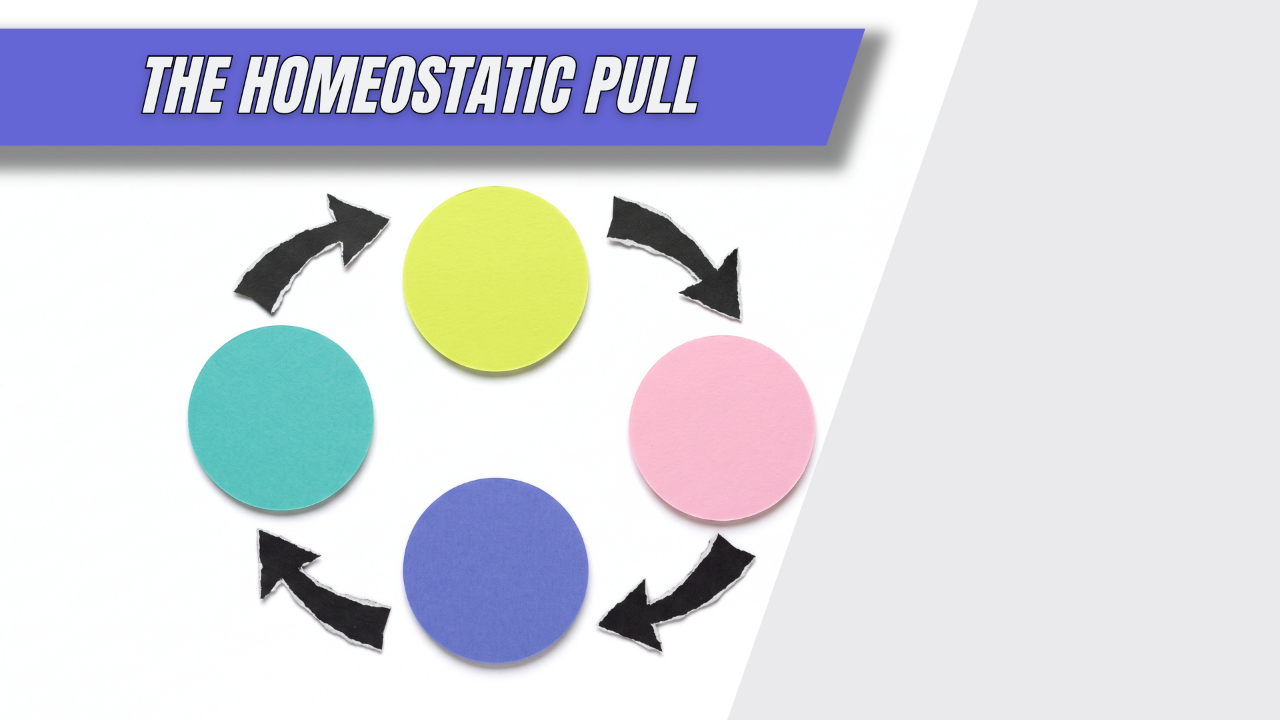
Parallel process is the idea that a relationship pattern can repeat in other circumstances, in the milieu of a treatment center or within a supervision group.
Imagine a father-daughter client locked in a push-pull, and the harder she pulls back, the harder he pushes. The therapist might start pressuring the supervisor to provide more information, be more available, and give extra attention to their case. In response, that supervisor might react to this pressure by ignoring the call, avoiding questions from the therapist in group, or simply withdrawing from their demands.
There are multiple reasons the supervisor reacts this way; maybe they’re like me and need more coffee, or they're just overwhelmed in their personal life. The point is we need to hold all the possibilities lightly before we jump to assume it’s a lack of caffeine OR a parallel process. More importantly, a good supervisor needs to hold BOTH and help the therapist determine whether unconscious dynamics are at play.
Similarity isn't proof, and not every uncomfortable feeling in supervision is a message from the family. So before naming it out loud, ask one plain question: does thinking about it this way help me do something more useful next session? If the answer's yes, say it. If you're not sure, sit with it another week. A pattern worth naming will still be there.
If you're interested in a family systems consultation group, I'd love to have you join in the fun. The best way is to join The Family Systems Collective and I can point you in the right direction from there.
Oliver



Responses