When families come to therapy, they usually want help fixing their problems, but they’re often hesitant or afraid to make changes. This paradox is at the core of many cases that get stuck and why I simultaneously love and hate family therapy.
Giving a family a task isn’t just about assigning homework for the sake of it. It’s a way to see how the family works together and if they're willing to even do the work. Watching how they organize themselves around a task can show us more about their dynamics than asking questions in a session
There are two main types of systemic tasks:
a) direct tasks, which help families make changes, and
b) paradoxical tasks, which address their resistance to change.
This newsletter is all about direct tasks—what they are, why they work, and how to use them effectively. I’ll save paradoxical tasks for another time, since they literally make my head hurt.
House Keeping!
- If this weeks email of 'setting homework' for families brings up a lot of questions for you - book a 1:1 consultation with me. Just shoot me an email here
- Family Therapy Group Consultation: I've been dragging my feet on this, but have proposed some times that I could make work in the online community. If you're interested please find the 'poll' thing i created and vote!
- Speaking of which, have you joined the Family Systems Collective yet? It's a free and it's a growing into a hub of people interested in family therapy, and it's basically where all the cool kids hang out and get to vote on what time group consultation is ;)
The Five Functions of Homework
Before we get into how to build a task, it's worth slowing down to consider why they work in the first place.
Here's the golden nugged of information: tasks don't work because families follow them, they work regardless of whether families follow them.
- Tasks help you learn about the family. Watching how a family handles a task reveals more about their structure than hours of talking. Who leads? Who steps back? Who changes the instructions to fit old patterns? Whether the task works or not, you gain new insights.
- Success isn’t the goal. This idea can take time to accept. If a family completes a task, you learn one thing. If they only do part of it, forget parts, or change it to fit their usual ways, you learn something else—sometimes even more valuable. With the right task, you always learn something useful.
- Tasks keep therapy going between sessions. When families have something to work on, they make progress even when they’re not in your office. This helps you cover more ground with fewer meetings.
- Tasks interrupt blame cycles. When families are stuck in blame, working together on a task shifts their focus to teamwork. This often helps break old patterns and gets things moving again.
- Families keep thinking about therapy. Even if they don’t do the task, it stays on their minds. Family members often wonder how you’ll react, what they’ll say, or what they didn’t do. This ongoing attention helps keep therapy active between sessions.
Four Questions Before You Design a Task
It’s tempting to jump right into assigning a task once you’ve decided to do it, but hold back for a second before you get all inspired after another Family Systems HIT email.
The task should target something specific and thought through, it can't just be about the problem behavior, but also has to consider the role it will play in the family. Without this understanding, a task is just another activity and can seem arbritary, like you're that annoying teacher who gives a test just because.
Ask yourself these four questions before giving a family homework and you'l see that they will make your recommendations much more effective.
Q1. How is this symptom necessary?
If the symptom disappeared tomorrow, if the teen went to school, stopped lying, or stopped acting out, what would the family have to face?
What conflict, anxiety, or vulnerability does the symptom protect them from?
For example, school refusal might keep a mother busy, keep a marriage distant, and delay an empty nest.
The symptom isn’t just a problem; it serves a purpose.
Q2. How is this symptom being perpetuated?
What relationship patterns are maintaining the symptom?
Watch for common issues like cross-generational alliances, reversed roles, differences in parenting styles, one parent being too close to the identified patient, or a parent being left out.
Ask yourself who benefits, even unintentionally, from the symptom sticking around. It’s rarely just the identified patient.
Q3. How does the symptom maintain the patterns?
Now look at it from the other side. Instead of just thinking about what causes the symptom, consider what the symptom causes.
The identified patient’s behavior often helps maintain the family system. For example, a child who acts out gives arguing parents something to focus on together.
A teenager who lies can keep a marriage from facing its own problems. The symptom and the family pattern support each other. Your task should break that cycle.
Q4. What structural shift would resolve this?
Be specific. Does the family need clearer boundaries?
Do the parents need to take back leadership?
Is there an alliance across generations that needs to change?
Is someone being left out who should be included?
The direct task should target this structural change, not just the symptom, but the relationships that keep it going.
Five Rules for Building a Direct Task
Once you know which structural issue you’re targeting, take care to design the task. What you ask matters, but how you present it is just as important.
If you present a good task poorly, you miss a valuable chance, so no pressure here.
1. Deliver with authority.
This is essential, I don't know if I say this enough in these emails, but I definitely say it in person: being a family therapist takes guts!
If you introduce a task with uncertain language like "I was wondering if you might want to try..." or "Do you think it might be worth considering..." you weaken its impact.
Families take the task as seriously as you do. Be clear and confident: "Here's what I'd like you to do this week" is much stronger than "I had a thought that maybe..."
2. Always provide a rationale.
Once you know which structural issue you’re targeting, take care to design the task. What you ask matters, but how you present it is just as important. If you present a good task poorly, you miss a valuable chance.
3. Involve everyone.
Make sure every family member has a role, and that's really hard.
Structure the task like any group project: one person leads, another supports, someone monitors, and someone reports back. Involving everyone shows that the problem belongs to the whole family, not just one person. It also prevents anyone from quietly opting out.
4. Respect hierarchy.
This is non-negotiable. Never give a child a task meant for adults. Don’t assign anything that gives a child more power than they should have.
Often, you’re trying to restore the parents’ authority, so your task should support that, not weaken it. If the problem is a reversed hierarchy, the task should help parents lead, not put the child in charge.
5. Match the task to the family.
If you’re working with an orderly, rule-oriented family, they will appreciate and respond better to a precise, structured task. That same task is unlikely to work for a more chaotic, enmeshed family that needs a lighter or more creative touch.
A task they can actually imagine doing is worth far more than the theoretically perfect task they'll forget before they reach the parking lot.
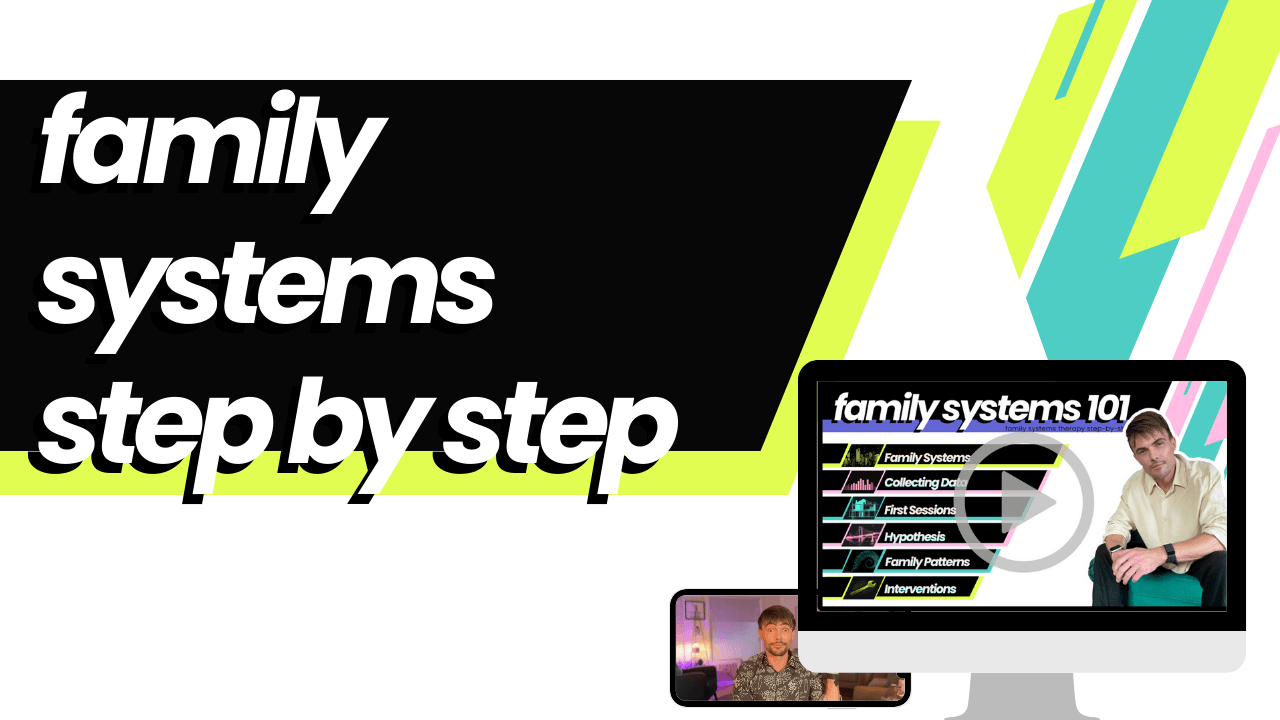
Family Systems: Step By Step..
Elevate your therapeutic skills with a structured, hands-on approach to family systems therapy. Designed for both new and experienced therapists, Family Systems Step By Step breaks down the complex world of systemic family work into clear, practical steps you can apply immediately in your sessions. What You’ll Learn: Master Core Family Systems Concepts: Understand hierarchy, boundaries, and family dynamics with confidence. Assess and Intervene Effectively: Learn how to use tools like circular questioning, family mapping, and systemic hypothesis building for deeper insights and better results. Real-Life Application: Oliver shares personal experiences and successful strategies from his extensive work with families in residential treatment. What’s Included: Practical Worksheets & Tools: Access downloadable PDFs, intake forms, and session guides to keep your work focused and effective. Step-By-Step Video Modules: Follow a structured learning path from assessment to intervention. Lifetime Access: Review the content anytime and receive future updates as the course evolves.